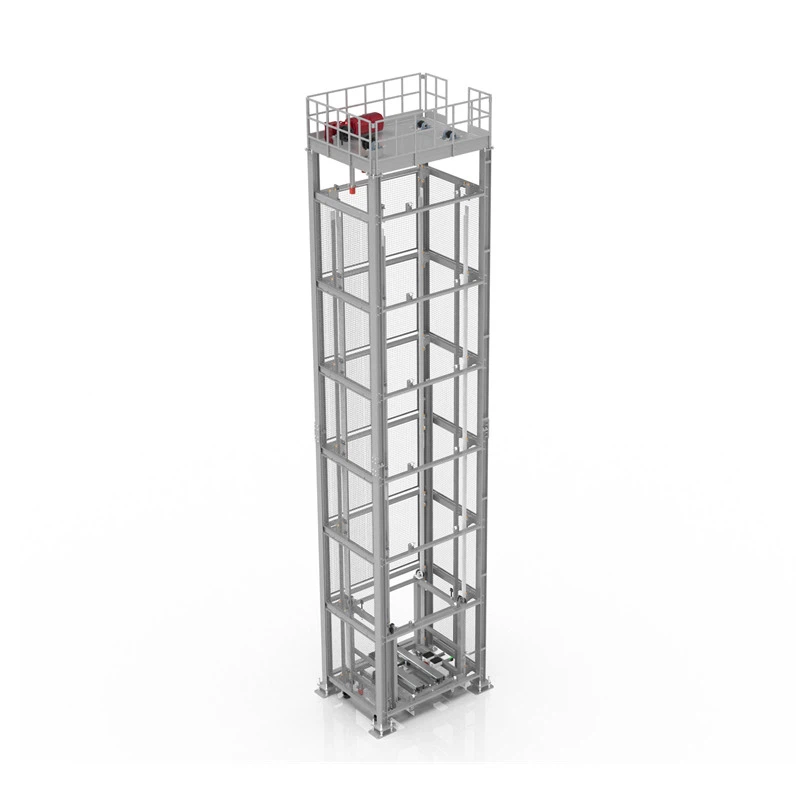
Ⅰ. Main Types of Warehouse Shelving Materials
The material used for warehouse shelving directly affects its load-bearing capacity, service life, and applicable environments. Currently, the four main materials are:
1. Steel: The most common and cost-effective, it is divided into ordinary carbon steel (Q235) and high-strength steel (Q345). Carbon steel shelves typically have a load capacity of 500kg to 5 tons per layer (refer to the "GB/T 28576-2012 Industrial Shelving Standard") and are often electrostatically sprayed for rust prevention. High-strength steel is suitable for heavy-duty shelves, with a load capacity of over 10 tons.
2. Aluminum: Lightweight and corrosion-resistant, it has a lower load capacity (200kg to 1 ton per layer) and is suitable for clean environments such as pharmaceuticals and food processing. However, its cost is 2-3 times that of steel.
3. Plastic: Mostly made of PP or HDPE, it is waterproof and moisture-resistant, has a load capacity of 50-300kg per layer, and is suitable for the cold chain and chemical industries. However, it is prone to aging and has a lifespan of approximately 5-8 years.
4. Composite materials: Such as steel-plastic hybrid racking, which combines the strength of steel with the corrosion resistance of plastic. These materials are more expensive and are often used in specialized scenarios.
II. How to choose a material based on your needs?
1. Steel is preferred for load-bearing capacity: Q345 steel is recommended for heavy-duty storage (such as automotive parts), while Q235 steel is sufficient for medium-duty racking (such as supermarket warehouses).
2. Environmental adaptability: Stainless steel (grades 304 or 316) or plastic racking are suitable for humid environments; heat-resistant steel (such as 310S stainless steel) is required for high-temperature workshops.
3. Cost control: Aluminum and composite materials have high initial investment but low maintenance costs. Steel requires regular rust prevention treatment and offers higher long-term cost-effectiveness.
III. Professional Data References and Case Studies
According to a 2022 report by the China Association of Warehousing and Storage, steel racking accounts for over 75% of the market share, with 80% of companies choosing Q235 carbon steel. Aluminum racking saw a 15% increase in use in the electronics industry, primarily due to its dust-free properties. For example, an e-commerce warehouse uses Q345 steel shelves, with a single layer bearing a load of 3 tons, and has not suffered any structural damage in 10 years.