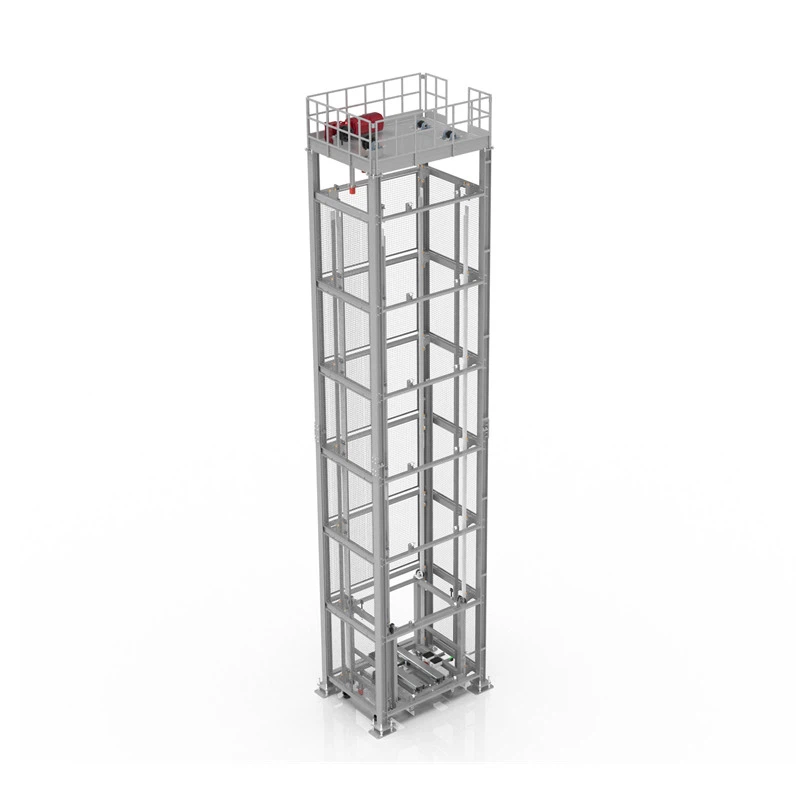
Smart Warehousing System
Once an automated warehouse goes live, robots and machines handle the physical work. But they do not decide how the warehouse should operate.
That job starts with WMS.
WMS receives orders and production requirements from ERP or MES and turns them into warehouse tasks. It keeps track of inventory, locations, batches and FIFO rules, and makes sure the operating logic agreed during implementation is followed every day.
WCS deals with what happens next: getting those tasks through the equipment efficiently.
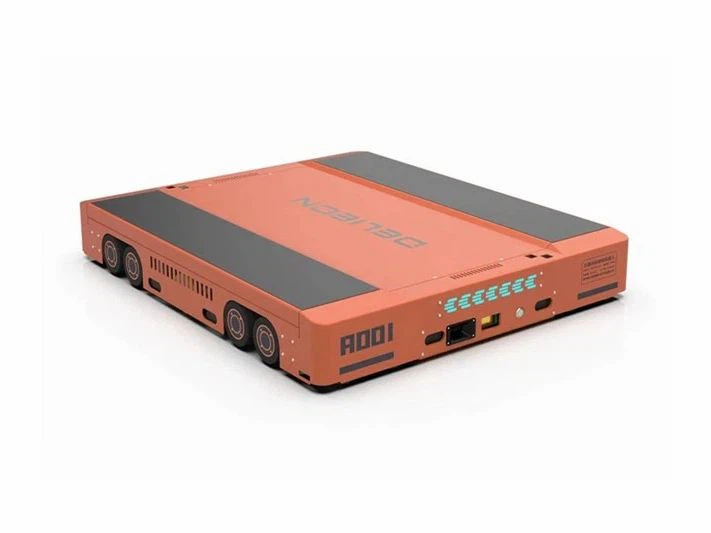
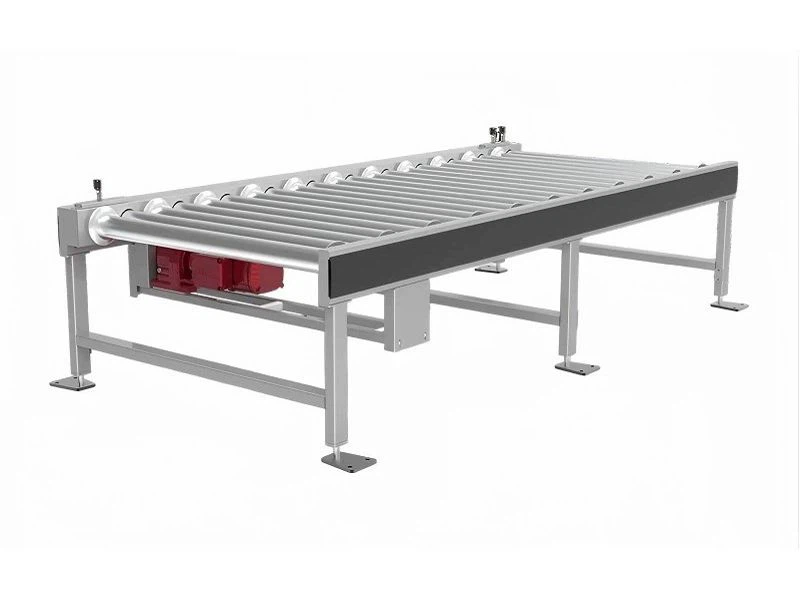
This becomes important when shuttle robots, stacker cranes, AMRs, RGVs, lifters and conveyors share the same material flow. In real projects, throughput is often lost at the handover points. A shuttle may have finished retrieval while the lifter is still occupied, or an AMR may reach a station before the next process is ready. WCS coordinates these connections and keeps the flow moving.
 (WMS) Warehouse Management SystemDELIECN Warehouse Management System (WMS) is a highly configurable and easily integrated software, it has certified at the international CMMI Level 5.view more
 (WCS) Warehouse Control SystemDELIECN Warehouse Control System (WCS) can integrate and uniformly control various warehousing and logistics equipment, such as shuttle robots, stacker cranes, conveying equipment, AMRs, sorting equipment.view more
 (HMS) Human Machine SystemDELIECN Human Machine System (HMS) is designed based on a modular architecture, supporting multi-touch, graphical interface, and multi-protocol communication interfaces, and can quickly connect with different types of automation equipment.view more
 (ECS) Electronic Control SystemDELIECN Electronic Control System (ECS) is the "central nervous system" of all input/output equipment in automated high-bay warehouses.view more
 API InterfaceDELIECN API Interface System (API) is designed for data interaction between different systems and equipment.view more
 3D Visualization Central Control SystemDELIECN 3D Visualization Central Control System is based on digital twin and 3D modeling technology, which can restore automated storage and retrieval scenarios in virtual space.view more
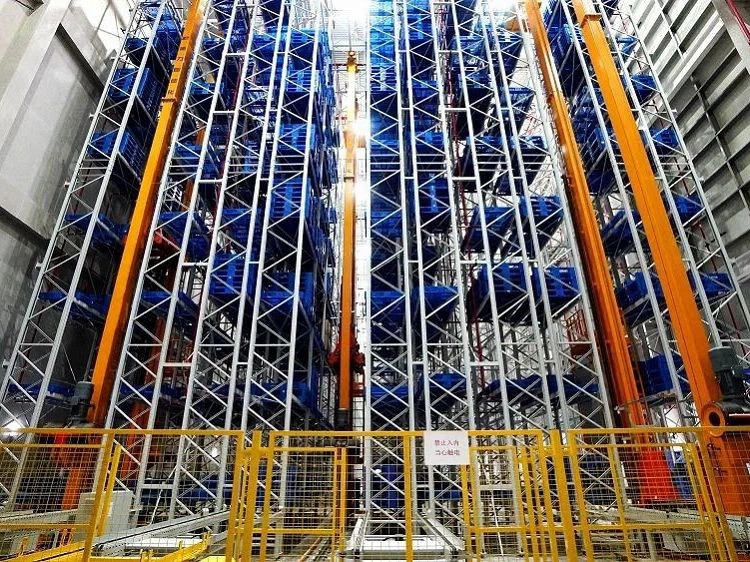
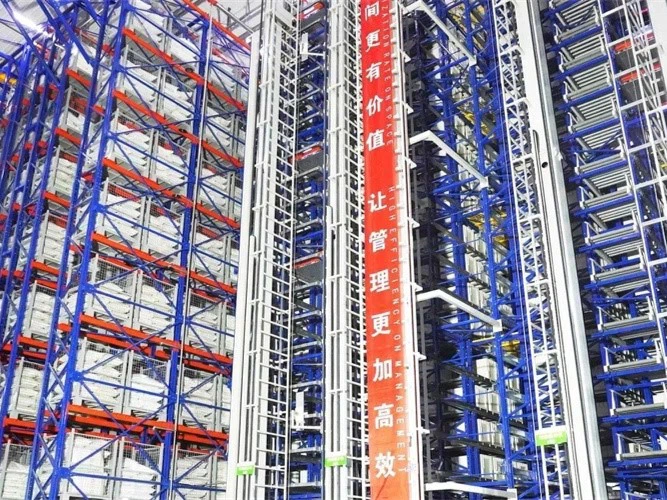
At YFY’s smart warehousing project, software also became part of daily production logistics. It supports line-side material management, urgent-order response, inventory traceability and coordinated operation across different equipment.
The project went one step further with a 3D Visualization Central Control System .
Instead of checking equipment one by one, operators can see the warehouse as a whole: where equipment is running, how tasks are progressing, where inventory is located and where an abnormal condition has appeared. With operating data accumulated over time, potential bottlenecks and risks can also be identified earlier, giving the team more time to adjust operations.
This is how we look at warehouse software in practice. WMS runs the business logic behind the warehouse; WCS keeps material moving through the equipment; digital twin technology gives operators a better view of the entire operation.
DELIECN provides six smart warehousing software systems for different levels of warehouse management, equipment coordination, data integration and operational control.
How the Six Systems Work Together in a Smart Warehouse
A smart warehouse does not become efficient simply because more software is installed.
What matters is whether the right information reaches the right system, and whether that information can finally be turned into a completed warehouse task.
For customers, the six systems can be understood through the problems they solve every day.
| What Customers Need | System | Value in Daily Operation |
| Know what is in stock, where it is stored, and what should happen next | WMS | Manages inventory, locations, batches, inbound, outbound, replenishment and picking rules. It keeps warehouse operations following the business logic defined for the project. |
| Keep different automated equipment working at the same rhythm | WCS | Coordinates shuttle robots, stacker cranes, AMRs, RGVs, lifters and conveyors. Its value is reducing waiting between processes and keeping material flow continuous. |
| Give operators one place to understand and operate equipment | HMS | Brings equipment status, alarms, operating information and manual intervention functions together, helping on-site teams respond faster when something changes. |
| Make sure system commands become accurate machine movements | ECS | Connects upper-level task commands with PLCs and field equipment, ensuring that conveyors, lifters, robots and other devices execute the required actions reliably. |
| Connect the automated warehouse with existing ERP, MES or other business systems | API Interface | Keeps order, production, inventory and execution data moving between systems, avoiding isolated information and repeated manual entry. |
| See the warehouse as a whole instead of checking equipment one by one | 3D Visualization Central Control System | Recreates the warehouse digitally, showing equipment, tasks, inventory and abnormal conditions in one view. It can also help operators identify potential congestion and risk points earlier. |
These six systems are not six independent software products working side by side.
They form different layers of the same operating process.
An order may begin in ERP or MES, enter the warehouse through an API interface, become an executable task in WMS, and then be coordinated by WCS across several pieces of equipment. ECS carries those commands down to the field level, while HMS and the 3D visualization platform help operators understand what is happening during execution.
For the customer, the result is easier to understand than the software architecture itself:
inventory stays visible, tasks move with fewer interruptions, equipment problems are easier to locate, and warehouse operations become more traceable.
Does Every Project Need All Six Systems?
Not necessarily.
A good software architecture should reuse what the customer already has rather than replacing systems without a reason.
If an existing WMS already meets warehouse management requirements, the project may focus on WCS, ECS and system interfaces. If equipment control is already mature but management lacks visibility, 3D visualization central control system may provide more immediate value.
The important question is therefore not:
“How many software systems should we install?”
It is:
“Which parts of the current warehouse process are still disconnected, difficult to control, or difficult to see?”
The right software combination should close those gaps without adding unnecessary complexity.
How Does a Task Move from the System to the Equipment?
The relationship between the different system layers becomes easier to understand when looking at an actual outbound task:
ERP / MES
>>
API Interface
>>
WMS
>>
WCS
>>
ECS
>>
Shuttle Robot / Stacker Crane / AMR / Conveyor / Lifter
A simple way to understand the roles is:
WMS decides “what the warehouse needs to do.”
WCS decides “how the equipment should work together to complete it.”
ECS translates the task into equipment actions.
API enables data exchange between different systems.
HMS mainly supports on-site operation and maintenance, while the 3D Visualization Central Control System helps managers see the overall warehouse operating status more intuitively.
Industry Applications
This section mainly serves as an entrance to the corresponding industry pages.
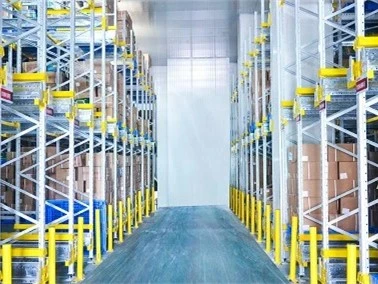
Food & Beverage
Connects raw materials, production, inventory, and shipping operations.
View Industry →
Pharmaceutical
Supports inventory, batch information, and warehouse logistics task management.
View Industry →
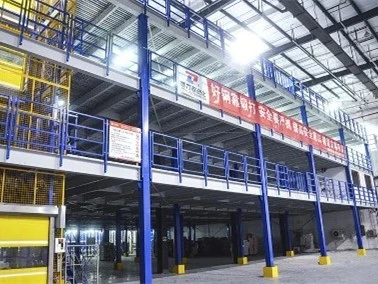
E-Commerce
Supports multi-SKU inventory, order processing, and automated picking workflows.
View Industry →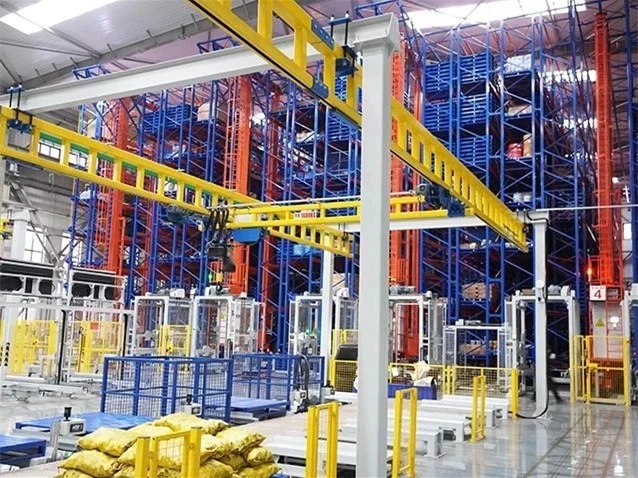
Cold Chain
Supports inventory and automated equipment task management in low-temperature warehouses.
View Industry →
Precision Manufacturing
Connects production, warehousing, and line-side material delivery.
View Industry →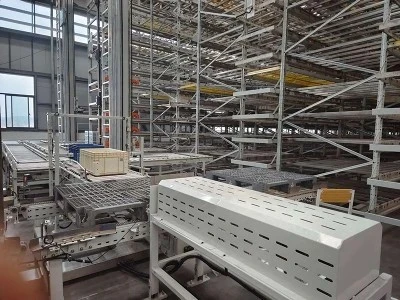
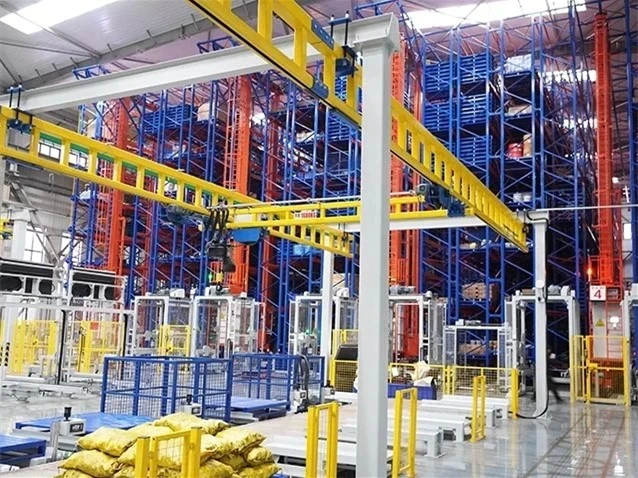
Battery Material
Connects raw materials, WIP, finished-goods storage, and production logistics.
View Industry →
More Industry Applications
Explore DELIECN smart warehousing applications across more manufacturing, warehousing, and distribution scenarios.
Explore More →
FAQ
Q: 1. What is the main difference between WMS and WCS?
A: The simplest way to understand it is:
WMS manages “goods and warehouse operations,” while WCS manages “automated equipment execution.”
WMS focuses on inventory, storage locations, inbound, outbound, relocation, and other warehouse operations.
WCS receives logistics tasks and then coordinates different types of automated equipment to complete the physical execution.
Q: 2. How do ERP, MES, and WMS work together in an automated warehouse?
A: ERP, MES, and WMS manage different parts of the business process.
ERP handles enterprise-level business information, MES manages production execution, while WMS focuses on warehouse operations such as inventory, storage locations, inbound, outbound, replenishment, picking, and batch management.
In an automated warehouse, WMS connects with the customer’s ERP or MES through DELIECN API interfaces. Order, production, and material data can be transferred into the warehouse system, where WMS converts them into executable warehouse tasks.
This allows production, inventory, and warehouse operations to stay connected without changing the customer’s existing ERP or MES architecture.
Q: 3. If We Already Have Our Own WMS, Can It Work Directly with DELIECN WCS?
A: Yes.
If the customer already has a mature WMS, there is no need to deploy an additional DELIECN WMS.
DELIECN WCS receives execution tasks from the WMS and coordinates shuttle robots, stacker cranes, AMRs, RGVs, lifters, conveyors, and other automated equipment.
The key during integration is to define the task interface, data fields, execution feedback, equipment status, and exception-handling logic between the two systems.
This allows customers to retain their existing WMS while adding DELIECN’s equipment scheduling and control capabilities without rebuilding the warehouse management layer.
Q: 4. What value does a 3D Visualization Central Control System bring?
A: Its value goes beyond displaying the warehouse in 3D.
It brings equipment status, task progress, inventory distribution, alarms, and material flow into one visual environment, allowing operators to understand the overall warehouse condition more quickly.
With accumulated operating data, it can also help identify potential bottlenecks and risk points earlier, supporting faster operational adjustments and better daily management.
DELIECN is one of the most reliable smart warehousing system manufacturers and suppliers in China, our products have good reputation in the market. Please rest assured to wholesale high quality smart warehousing system at competitive price from our factory. Contact us for more details.