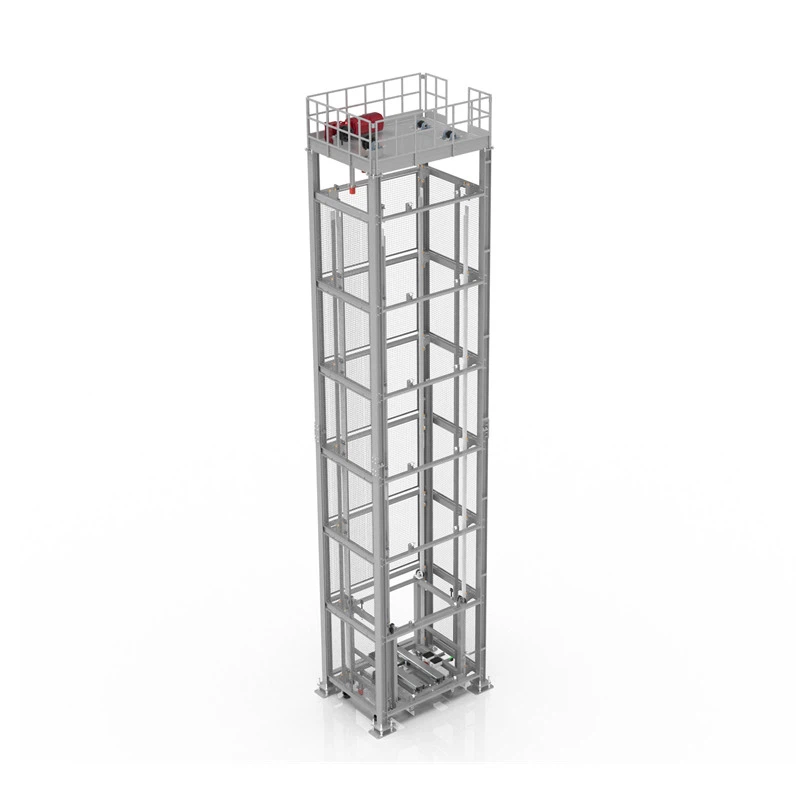
Material Handling Robot
Material Handling Robot plays different roles and is used at different stages in real warehouse and intralogistics operations. Different load carriers require different types of equipment. Storage location is also critical: some materials need to be stored in AS/RS facilities tens of meters high, while others only need to move at floor level. Some materials move only within the racking, while others need to interface directly with production lines. In addition, inbound and outbound efficiency, batch management, FIFO or LIFO strategies, and other operational logic all need to be clarified before selecting the right equipment.
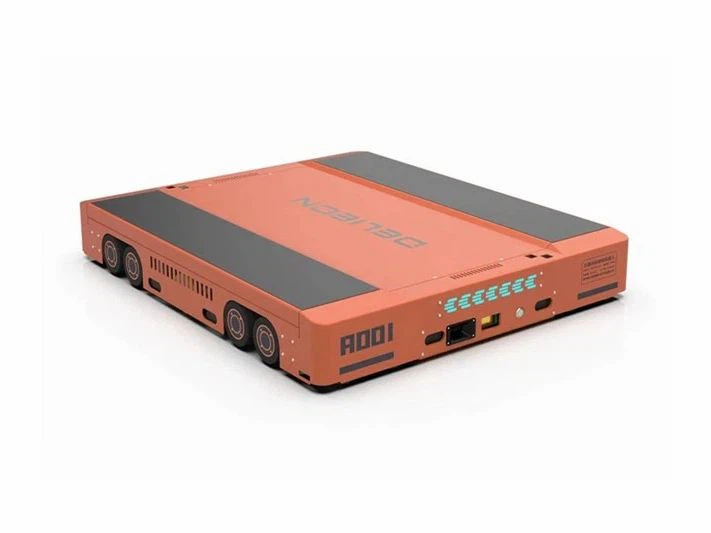
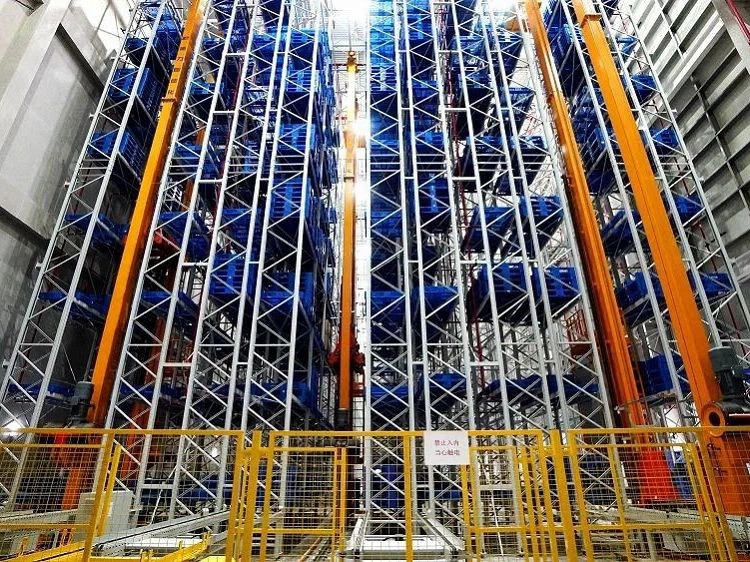
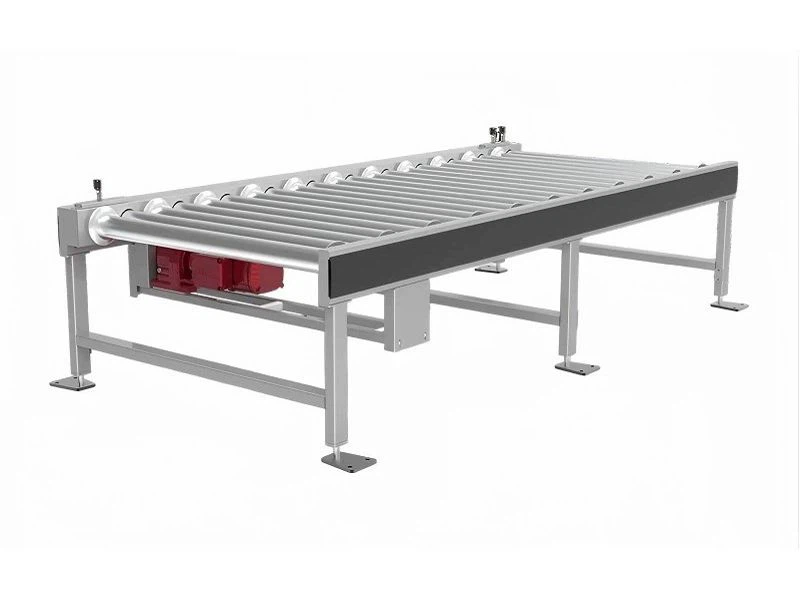
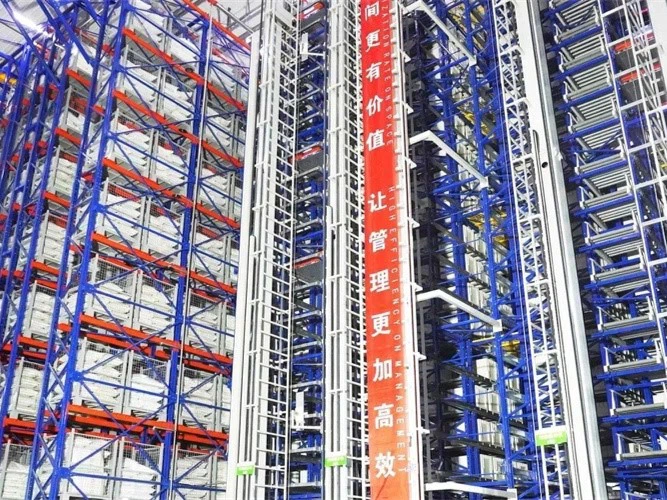
To address different Material Handling Robots, DELIECN develops and manufactures six product series: Shuttle Robots, Mini-FlyBox, Stacker Cranes, AMRs, RGVs, and Conveyors, supporting the automated storage, retrieval, transfer, and production delivery of pallets, totes, cartons, and other standardized or non-standard load carriers.
Existing Product Display Section
-
![Pallet Four-Way Shuttle Robot]() Pallet Four-Way Shuttle RobotPallet Four-Way Shuttle Robot For Automated Storage And Retrievalview more
Pallet Four-Way Shuttle RobotPallet Four-Way Shuttle Robot For Automated Storage And Retrievalview more
DELIECN Pallet 4-Way Shuttle Robot redefines flexibility in high-density storage. Breaking the limitations of traditional shuttles, it moves forward, backward, and... -
![Pallet Two-Way Shuttle Robot]() Pallet Two-Way Shuttle RobotPallet Two-Way Shuttle Robot For Automated Warehouseview more
Pallet Two-Way Shuttle RobotPallet Two-Way Shuttle Robot For Automated Warehouseview more
DELIECN Pallet Two-Way Shuttle Robot delivers efficient and precise pallet handling within a single aisle. Designed for high-speed reciprocating movement, it works seamlessly... -
![Pallet Parent Child Shuttle Robot]() Pallet Parent Child Shuttle RobotDELIECN Pallet Mother-Child Shuttle running on main track and multiple Child Shuttles operating on storage rails. The Mother Shuttle precisely transporting Child Shuttles to target aisles, where they perform storage and retrieval.view more
Pallet Parent Child Shuttle RobotDELIECN Pallet Mother-Child Shuttle running on main track and multiple Child Shuttles operating on storage rails. The Mother Shuttle precisely transporting Child Shuttles to target aisles, where they perform storage and retrieval.view more -
![Cold Storage Pallet Shuttle Robot]() Cold Storage Pallet Shuttle RobotHigh Performance Of Cold Storage Pallet Shuttle Robotview more
Cold Storage Pallet Shuttle RobotHigh Performance Of Cold Storage Pallet Shuttle Robotview more
DELIECN Cold Storage Pallet Shuttle Robot is engineered for extreme freezer environments down to -25°C. Built with advanced materials, structural reinforcement, and... -
![Tote Four-Way Shuttle Robot]() Tote Four-Way Shuttle RobotDELIECN High-Density High-Throughput Tote Four-Way Shuttle Robotview more
Tote Four-Way Shuttle RobotDELIECN High-Density High-Throughput Tote Four-Way Shuttle Robotview more
DELIECN Tote Four-Way Shuttle Robot features omnidirectional movement, allowing it to travel both along and across aisles for fully flexible scheduling. It enables... -
![Explosion-Proof Pallet Shuttle Robot]() Explosion-Proof Pallet Shuttle RobotDELIECN Explosion-Proof Pallet Shuttle Robot is designed for hazardous environments with flammable or explosive risks, such as chemical plants, coatings, energy, and pharmaceutical warehouses, it integrates explosion-proof motors,...view more
Explosion-Proof Pallet Shuttle RobotDELIECN Explosion-Proof Pallet Shuttle Robot is designed for hazardous environments with flammable or explosive risks, such as chemical plants, coatings, energy, and pharmaceutical warehouses, it integrates explosion-proof motors,...view more -
![Tote Two-Way Shuttle Robot]() Tote Two-Way Shuttle RobotDELIECN Tote Two-Way Shuttle Robot travels efficiently along a single aisle with high speed and stability. Designed for compact warehouses or fixed-route operations, it offers a cost-effective solution for automated tote storage and...view more
Tote Two-Way Shuttle RobotDELIECN Tote Two-Way Shuttle Robot travels efficiently along a single aisle with high speed and stability. Designed for compact warehouses or fixed-route operations, it offers a cost-effective solution for automated tote storage and...view more -
![Cold Storage Tote Shuttle Robot]() Cold Storage Tote Shuttle RobotDELIECN Cold Storage Tote Shuttle Robot is designed for reliable operation in freezer environments down to –25°C. Through low-temperature optimization in materials, structure, and electrical systems. It enables automated tote storage...view more
Cold Storage Tote Shuttle RobotDELIECN Cold Storage Tote Shuttle Robot is designed for reliable operation in freezer environments down to –25°C. Through low-temperature optimization in materials, structure, and electrical systems. It enables automated tote storage...view more -
![Dual-Station Tote Four-Way Shuttle Robot]() Dual-Station Tote Four-Way Shuttle RobotBuilt for high-throughput and high-density storageview more
Dual-Station Tote Four-Way Shuttle RobotBuilt for high-throughput and high-density storageview more -
![Single-Mast Pallet Stacker Crane]() Single-Mast Pallet Stacker CraneMaximize Space, Maximize Efficiency: DELIECN Single Mast Pallet Stacker Craneview more
Single-Mast Pallet Stacker CraneMaximize Space, Maximize Efficiency: DELIECN Single Mast Pallet Stacker Craneview more
DELIECN Single Mast Pallet Stacker Crane is an intelligent equipment designed for medium-duty, medium height warehouses. With its compact single-mast... -
![Double-Mast Pallet Stacker Crane]() Double-Mast Pallet Stacker CraneDELIECN Double Mast Crane: Heavy-Duty, Ultra-Stable Performanceview more
Double-Mast Pallet Stacker CraneDELIECN Double Mast Crane: Heavy-Duty, Ultra-Stable Performanceview more
DELIECN double Mast Pallet Stacker Crane features a robust dual-column structure, delivering superior dynamic stability and exceptional load capacity (up to 8 tons).... -
![Heavy-Duty Pallet Stacker Crane]() Heavy-Duty Pallet Stacker CraneHeavy-Duty Pallet Stacker Crane - Redefining Automation, Maximizing Warehouse Efficiencyview more
Heavy-Duty Pallet Stacker CraneHeavy-Duty Pallet Stacker Crane - Redefining Automation, Maximizing Warehouse Efficiencyview more
DELIECN Heavy Duty Pallet Stacker Crane is purpose-built to handle extra-long, ultra-heavy, and oversized goods. With load capacities up to...


In actual projects, the process does not begin with deciding, “Which equipment do I want?” Instead, it starts with evaluating the material characteristics, warehouse conditions, expected storage density, daily throughput, and Peak throughput. Of course, budget is also a key factor. After a comprehensive evaluation, the appropriate equipment type or equipment combination can then be determined.
What Problems Should Material Handling Robot Really Solve?
On the one hand, warehouse space is becoming increasingly constrained. Traditional forklift aisles occupy a large amount of floor space, while the upper part of the warehouse is often underutilized.
On the other hand, labor costs continue to rise. Material handling, picking, inventory counting, and other operations still rely heavily on operator experience and skill, making it difficult to consistently meet higher requirements for accuracy and efficiency.
Third, mixed forklift and pedestrian operations introduce safety risks and can also lead to product collisions and damage.
Fourth, during peak order periods, manual operations and traditional handling methods may struggle to meet higher fulfillment requirements.
In addition, industries such as pharmaceuticals, food and beverage, automotive, and retail increasingly require product traceability, creating further challenges for warehouses that still depend heavily on traditional operating methods.
Different types of Material Handling Robot have therefore been developed to address these challenges.
When space utilization is the main issue, shuttle robots work with high-density racking layouts and are coordinated by WMS/WCS together with lifters and conveyors to improve warehouse space utilization.
For high-frequency tote picking applications, the Mini-FlyBox operates at speeds of up to 3.5 m/s to support efficient picking, storage, and retrieval.
Warehouse logistics equipment does not work as isolated machines. The greater value comes from coordinated operation. A partner capable of supplying multiple equipment types can therefore configure different equipment combinations according to the specific requirements of each project.
How Can You Quickly Determine Which Type of Material Handling Robot to Consider First?
No single piece of equipment can solve every warehouse scenario. When evaluating the right choice, a preliminary assessment can first be made based on budget, warehouse conditions, load carriers, SKU quantity, throughput, and peak-period response requirements.
| Logistics Scenario | Priority Equipment | What It Mainly Solves | DELIECN Core Technical Advantages |
| Fewer SKUs, with a need to store more palletized materials within limited space | Pallet Four-Way Shuttle Robot | High-density storage and cold-storage adaptability | The ultra-thin four-way shuttle has a body height of only 125 mm, allowing more racking levels to be deployed. Rated load capacity is up to 1,500 kg, with ±2 mm positioning accuracy. It supports multiple pallet sizes commonly used in Europe, the United States, and Asia, with a standard load of 1,500 kg and stable operation at temperatures down to -25°C. |
| Multiple SKUs with high inbound and outbound efficiency requirements | Pallet Stacker Crane + Pallet Two-Way Shuttle Robot | High-frequency storage and retrieval of different SKUs | Stacker cranes are available in single-mast / double-mast and single-deep / double-deep configurations, and can be engineered for high-bay heavy-load applications, anti-sway control, and non-standard load carriers. Combined with Pallet Two-Way Shuttle Robots, the system supports both high-density and high-efficiency storage and retrieval. |
| Multiple SKUs requiring high-frequency storage and retrieval of totes and cartons within limited space | Tote Shuttle Robot | High-density, high-efficiency tote storage and retrieval | Travel speed reaches up to 5 m/s, with ±2 mm positioning accuracy for efficient and precise handling. Depending on the model, the fork width can be adjusted to support mixed storage of totes and cartons from 140–600 mm. A dual-station configuration can handle two totes in one cycle, increasing operating efficiency by 80%–90%. |
| Compact tote warehouse with narrow aisles | Mini-FlyBox | Compact automated tote storage and retrieval | Integrated racking and travel structure, with aisle occupation of only 860 mm and travel speed of up to 3.5 m/s, supporting high-density storage and high-frequency picking. |
| Material transfer between warehouses, between warehouse and production line, or across warehouse floor areas | AMR | Flexible warehouse and production-area delivery | The AMR range includes Tote AMR, Pallet Latent AMR, and Pallet Fork AMR. The appropriate model can be selected according to the load carrier and interface requirements, while routes and destination stations can be adjusted according to tasks. |
| High-frequency transport between fixed stations | Straight-Rail RGV | Point-to-point transport between fixed nodes | Travels back and forth along a straight rail and can interface with stacker cranes, AMRs, and conveyors for efficient pallet transfer between fixed stations. |
Not Sure Which Equipment Is More Suitable?
If you already have a warehouse layout, cargo dimensions, weight information, and inbound/outbound efficiency requirements, contact us.
How Does a Load Move from Storage to Its Final Destination?
In real projects, one piece of Material Handling Robot usually handles only one section of the overall process.
A typical pallet logistics combination may look like this:
Pallet from Storage Location to Production Line
Pallet Stacker Crane / Pallet Shuttle Robot
→ Pallet Lifter
→ Conveyor / RGV
→ Pallet AMR
→ Production Line
The stacker crane or shuttle equipment handles storage and retrieval inside the warehouse. The lifter transfers materials between different racking levels. conveyors and RGVs handle transfer between fixed interfaces, while AMRs provide flexible delivery between different areas.
Tote from Storage Location to Picking Station
Tote Shuttle Robot / Mini-FlyBox / Miniload
→ Tote Lifter / Conveyor / Tote AMR
→ Goods-to-Person Station
What Tasks Does Material Handling Robot Typically Perform?
Material Storage and Retrieval Inside the Racking
Equipment enters the high-bay racking area and uses automated travel, fork handling, or material transfer mechanisms to complete automatic inbound, storage, and outbound operations.
Key Equipment: Shuttle Robot / Mini-FlyBox / Stacker Crane
Material Transfer at the Warehouse Front End
According to task requirements, conveyors, RGVs, and AMRs handle material transfer at the front end of the warehouse, moving loads to picking stations or production lines.
Key Equipment: Conveyor / RGV / AMR
What Really Matters When Comparing Material Handling Solutions?
Different types of Material Handling Robot do not have an absolute advantage over one another.
Stacker cranes, shuttle robots, Mini-FlyBox, AMRs, and RGVs solve different logistics problems in different application scenarios.
When companies compare different equipment combinations, the real focus should not be only on the specifications of a single product, but on the best overall solution under multiple constraints.

Investment Value: Short-Term Cost vs. Long-Term Return
Selecting an equipment solution should not be based solely on the initial purchase price.
Long-term equipment maintenance, labor savings, efficiency improvements, and the possibility of future warehouse upgrades also need to be evaluated.
Some solutions have a lower initial investment but limited expansion capability. Others require a higher initial investment but may provide greater long-term value.
Storage Density: Which Equipment Combination Stores More in the Same Space?
For companies with limited warehouse space, the first concern is often how to store more materials within the smallest possible footprint.
Demand for shuttle robots has grown rapidly in recent years. Beyond their cost advantages, their stronger value lies in high-density storage.
Deeper storage lanes, greater use of vertical space, and fewer aisle requirements allow shuttle systems to stand out among many warehouse material handling solutions.


Inbound and Outbound Efficiency: Can the System Meet the Actual Operating Rhythm?
A warehouse not only needs to store more—it also needs to retrieve goods quickly.
Different companies have different efficiency requirements.
Manufacturing companies focus on whether materials can be delivered to production on time. Food, pharmaceutical, and retail operations are often more concerned with whether large numbers of smaller orders can be fulfilled quickly.
However, this cannot usually be achieved by one type of equipment alone. It is the result of multiple equipment types working together.
Flexibility: Is Future Expansion Easy?
Stacker crane AS/RS solutions offer clear advantages, but expansion after the warehouse is completed can be more restricted. Once the warehouse layout is fixed, system capacity and throughput are also constrained.
By comparison, shuttle robot solutions use a modular architecture, and throughput can be increased by adding more equipment.
Therefore, when selecting a material handling solution, what customers are really comparing is not:
“Which robot runs the fastest?”
but:
Which solution can achieve higher storage density, better return on investment, higher inbound and outbound efficiency, and stronger flexibility and scalability under the current warehouse conditions?

Which Projects Require Special Configurations?
Low-Temperature Environments
For applications such as -25°C cold storage, key components such as electrical systems and batteries need to be configured according to the operating temperature.
High-Bay Heavy-Load Applications
As storage height and load weight increase, greater attention needs to be paid to the stability of heavy-load operation, the safety of high-level storage and retrieval, and floor load-bearing capacity.
Non-Standard Pallets and Load Carriers
If the dimensions or bottom structure do not follow conventional standards, the system may require customized handling. Load carrier types may need to be standardized, or a mother pallet may need to be added.
How Is Material Handling Robot Applied Across Different Industries?
Pharmaceutical | Storage for Different Load Types
Pallet stacker cranes handle the storage and retrieval of large raw-material loads, while Tote Shuttle Robots handle smaller finished products, together supporting 24,400+ storage locations and a 95% increase in space utilization.
Multi-type Materials | Multi-Equipment | High Throughput
Automotive | Multi-SKU Storage and Distribution
Pallet Four-Way Shuttle Robots, Mini-FlyBox, Tote AMRs, and other Material Handling Robot work together to handle 45,000 SKUs, reducing the order fulfillment cycle from 8 days to 2 days.
Multi-SKU | Multi-Equipment Coordination | Flexible Distribution
Food Cold Chain | -25°C Automated Cold Storage
Low-temperature Pallet Four-Way Shuttle Robots handle high-density pallet storage and retrieval inside the cold warehouse, reducing conventional aisle requirements and the need for personnel to enter low-temperature storage areas.
Low Temperature | High Density | Automated Storage & Retrieval
Precision Manufacturing | Supporting the Global Supply Chain
A stacker crane AS/RS connects first-floor production with second-floor picking operations. Compared with traditional floor stacking, space utilization increased by approximately 9 times, while picking staff was reduced from 20 to 6.
Goods to Person | High Density | Fast Response Time
Chemical | Safe and Efficient Pallet Handling – Hengguang
16 Pallet Shuttle Robots operate 24/7, achieving an inbound and outbound throughput of 132 pallets/hour, approximately 3–5 times that of a traditional warehouse.
24/7 operation丨Precision Operations丨Security
Battery Material | 21 m High-Density Heavy-Load Pallet Warehouse – Rongtong
Nearly 40,000 pallet locations, with more than 30 Pallet Four-Way Shuttle Robots operating collaboratively to handle heavy loads exceeding 1 ton per pallet.
High Density | Heavy Load | Multi-Shuttle Coordination
FAQ
Q: 1. Both Stacker Cranes and Pallet Shuttle Robots can store pallets. How should I choose?
A: A Stacker Crane operates within a fixed aisle and performs horizontal travel, vertical lifting, and pallet storage and retrieval. It is better suited to high-bay storage, direct access to storage locations, and heavy-load applications.
A Pallet Shuttle Robot operates inside the racking and is better suited to high-density and deep-lane storage.
Q: 2. Miniload, Tote Shuttle, and Mini-FlyBox can all handle totes. What is the difference?
A: A Miniload uses one machine to complete both horizontal and vertical storage and retrieval within an aisle, making it suitable for structured, high-bay small-parts warehouses.
A Tote Shuttle uses multiple units operating in parallel inside the racking and can work with lifting equipment when level changes are required.
A Mini-FlyBox integrates horizontal travel and vertical lifting into one machine.
Q: 3. How many pieces of equipment are required for one project?
A: This cannot be determined solely by warehouse area or the number of storage locations.
Peak task volume and the handling capacity of lifters, conveyors, and workstations also need to be considered.
Q: 4. Can Material Handling Robot operate in a -25°C cold-storage environment?
A: Yes. DELIECN shuttle robots have already been applied in multiple low-temperature projects.
Q: 5. How do I choose the right Material Handling Robot?
A: The selection needs to consider material type, load capacity, warehouse layout, storage density, inbound and outbound efficiency, and future expansion requirements.
Stacker cranes are suitable for high-bay pallet storage. Shuttle robots are suitable for high-density storage. Mini-FlyBox and Tote Shuttle Robots are suitable for high-frequency small-item storage and retrieval. AMRs are suitable for flexible material transport.
Q: 6. Besides price, what else should I consider when selecting Material Handling Robot?
A: In addition to the initial investment, it is also important to consider storage efficiency, operating stability, future scalability, spare-parts availability, and after-sales support, so that the system can continue to meet long-term business development needs.
DELIECN is one of the most reliable material handling robot manufacturers and suppliers in China, our products have good reputation in the market. Please rest assured to wholesale high quality material handling robot at competitive price from our factory. Contact us for more details.