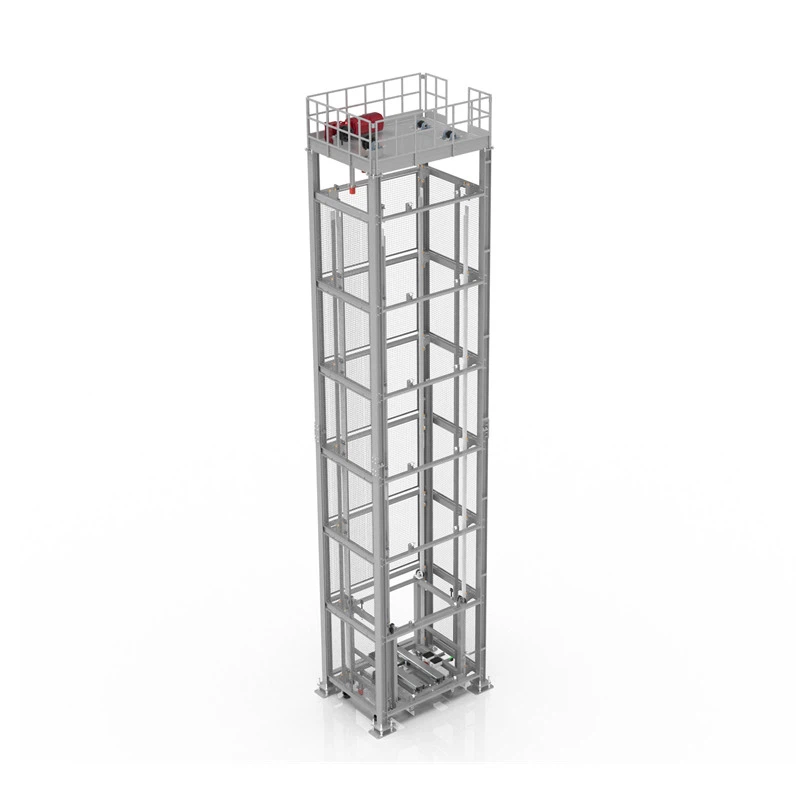
Warehouse Racking
When customers evaluate warehouse racking, the first concern is usually not the rack type itself, but whether it will remain safe, stable, and compatible with the way the warehouse actually operates.
For conventional warehouses, the key questions are load capacity, storage method, forklift access, and long-term structural reliability.
For automated warehouses, the requirements go further. Rack dimensions, rail interfaces, installation accuracy, pallet or tote specifications, and equipment clearances all need to match the automation from the beginning. A small mismatch in the racking can affect shuttle movement, stacker crane access, storage density, and even later commissioning.
That is why DELIECN separates racking into two application directions:
AS/RS Racking
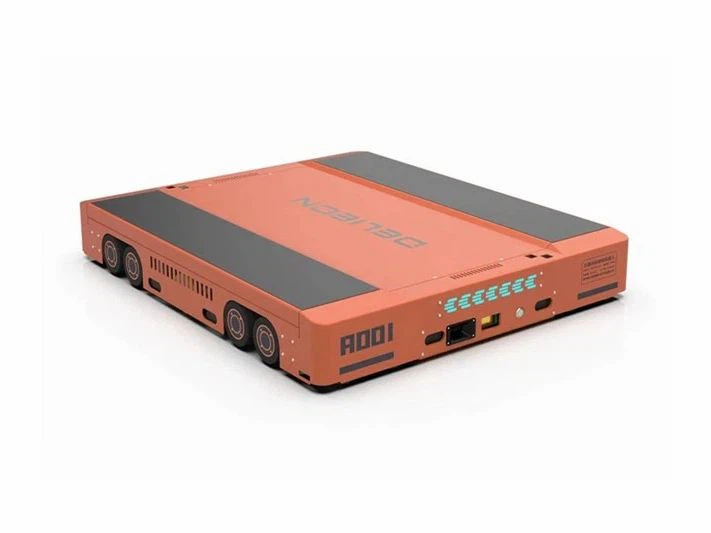
Designed around automated equipment such as pallet shuttle robots, tote shuttle robots, stacker cranes, Mini-FlyBox, and Miniload.
Storage Racking Systems
Designed for manual or forklift-operated warehouses, with the structure selected according to load type, warehouse conditions, and storage requirements.
For customers, a good racking solution is not simply one that can hold the load. It should also fit the industry, match the handling equipment, and remain reliable throughout long-term operation.
Existing Product Display Section
-
![Pallet Shuttle Robot Racking]() Pallet Shuttle Robot RackingDELIECN Pallet Shuttle Racking: Smart, High-Density Warehouse Storageview more
Pallet Shuttle Robot RackingDELIECN Pallet Shuttle Racking: Smart, High-Density Warehouse Storageview more
Pallet Shuttle Robot Racking,uses steel sourced from globally renowned steel mills. They offer a machining accuracy of ±0.1mm and undergo a silane treatment... -
![Tote Shuttle Robot Racking]() Tote Shuttle Robot RackingDELIECN Tote Shuttle Robot Racking offer strong scalability, enabling adjustments to shelf height and layout to meet warehouse requirements. They support the storage of light to medium-sized small items. Backed by over 1,000 project...view more
Tote Shuttle Robot RackingDELIECN Tote Shuttle Robot Racking offer strong scalability, enabling adjustments to shelf height and layout to meet warehouse requirements. They support the storage of light to medium-sized small items. Backed by over 1,000 project...view more -
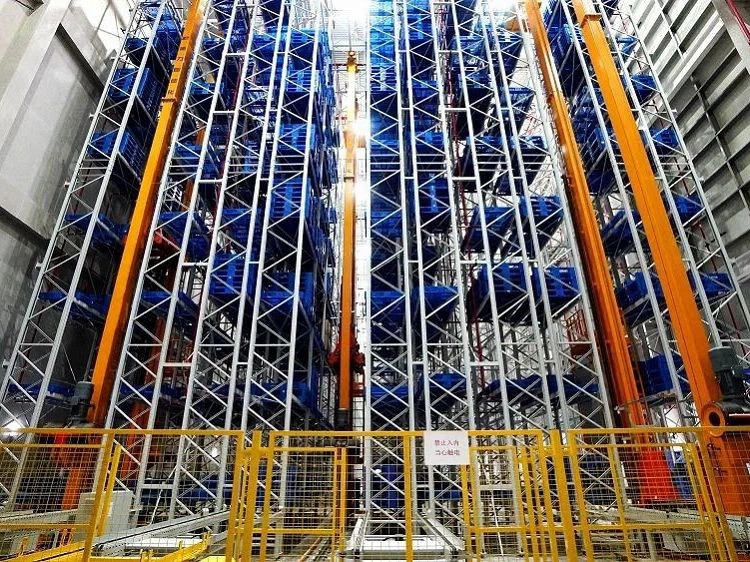
![Pallet Stacker Crane Racking]() Pallet Stacker Crane RackingDELIECN Pallet Stacker Crane Racking offers strong scalability, enabling height and layout adjustments to be made based on storage requirements. It supports the storage of heavy palletized cargo and enables precise load access with...view more
Pallet Stacker Crane RackingDELIECN Pallet Stacker Crane Racking offers strong scalability, enabling height and layout adjustments to be made based on storage requirements. It supports the storage of heavy palletized cargo and enables precise load access with...view more -
![Mini-Flybox Racking]() Mini-Flybox RackingDELIECN Mini-Flybox Racking features a multi-layer, high-density structure with tightly arranged tote storage positions, specially designed for compact warehouses. It works seamlessly with DELIECN Mini-Flyboxs (TMR), which retrieve...view more
Mini-Flybox RackingDELIECN Mini-Flybox Racking features a multi-layer, high-density structure with tightly arranged tote storage positions, specially designed for compact warehouses. It works seamlessly with DELIECN Mini-Flyboxs (TMR), which retrieve...view more -
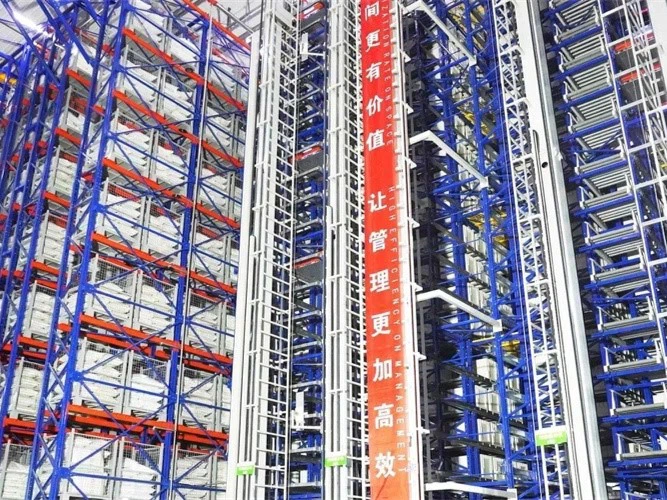
![Pallet Stacker Crane + Shuttle Robot Racking]() Pallet Stacker Crane + Shuttle Robot RackingRacking for Stacker Crane and Shuttle Robot is generally designed to be relatively high in order to increase the utilization of vertical space in warehouses. The stacker cranes can solve the problem of goods falling from a very high...view more
Pallet Stacker Crane + Shuttle Robot RackingRacking for Stacker Crane and Shuttle Robot is generally designed to be relatively high in order to increase the utilization of vertical space in warehouses. The stacker cranes can solve the problem of goods falling from a very high...view more -
![Miniload Racking]() Miniload RackingDELIECN Miniload Crane Racking is a core component of AS/RS systems for small-item storage. Specifically designed for small, lightweight materials, it accommodates bins of various sizes and shapes, with rack dimensions that can be...view more
Miniload RackingDELIECN Miniload Crane Racking is a core component of AS/RS systems for small-item storage. Specifically designed for small, lightweight materials, it accommodates bins of various sizes and shapes, with rack dimensions that can be...view more -
![Heavy Duty Racking]() Heavy Duty RackingDELIECN Heavy Duty Racking features a stable structure, high load-bearing capacity, and efficient space utilization. Its height, span, and load capacity can be customized to enable flexible expansion. The rack supports flexible cargo...view more
Heavy Duty RackingDELIECN Heavy Duty Racking features a stable structure, high load-bearing capacity, and efficient space utilization. Its height, span, and load capacity can be customized to enable flexible expansion. The rack supports flexible cargo...view more -
![Push-in Racking For High-Density Storage]() Push-in Racking For High-Density StoragePush-in racking, also known as push-back racking, is a high-density pallet storage system designed for single-aisle operation. Goods are loaded and retrieved from the same side of the rack, using a combination of inclined rails and...view more
Push-in Racking For High-Density StoragePush-in racking, also known as push-back racking, is a high-density pallet storage system designed for single-aisle operation. Goods are loaded and retrieved from the same side of the rack, using a combination of inclined rails and...view more -
![Mezzanine Racking]() Mezzanine RackingDELIECN Mezzanine Racking is a space-optimizing solution within the storage system. By using racking as floor support, it can be integrated into existing spaces to create two or three levels, which maximizes the utilization of upper...view more
Mezzanine RackingDELIECN Mezzanine Racking is a space-optimizing solution within the storage system. By using racking as floor support, it can be integrated into existing spaces to create two or three levels, which maximizes the utilization of upper...view more -
![Steel Structure Platform]() Steel Structure PlatformDELIECN Steel Structure Platform integrates with Lifter / Forklift to enable coordinated management of upper and lower levels. Its modular design facilitates future disassembly and relocation, allowing businesses to expand, resize, or...view more
Steel Structure PlatformDELIECN Steel Structure Platform integrates with Lifter / Forklift to enable coordinated management of upper and lower levels. Its modular design facilitates future disassembly and relocation, allowing businesses to expand, resize, or...view more -
![Steel Storage Pallet]() Steel Storage PalletDELIECN Steel Storage Pallet is a core load-bearing component of the Automated Storage system. Its standardized dimensions and metal construction deliver high strength and durability. In-house manufacturing ensures fast delivery, making...view more
Steel Storage PalletDELIECN Steel Storage Pallet is a core load-bearing component of the Automated Storage system. Its standardized dimensions and metal construction deliver high strength and durability. In-house manufacturing ensures fast delivery, making...view more -
![Drive In Racking]() Drive In RackingDELIECN Drive-In Racking system is a space-efficient solution within the Storage lineup. It allows forklifts to enter and exit the racking directly from one side, eliminating the need for multiple aisles. Its total depth typically...view more
Drive In RackingDELIECN Drive-In Racking system is a space-efficient solution within the Storage lineup. It allows forklifts to enter and exit the racking directly from one side, eliminating the need for multiple aisles. Its total depth typically...view more


How Can You Quickly Determine Which Type of Warehouse Racking to Consider First?
If you are not yet sure which specific racking type you need, start with the storage and retrieval method and the type of load being stored.
|
Your Storage Scenario |
Priority Racking Type |
What It Mainly Solves |
|
Pallets need to be stored and retrieved at high density by shuttle robots |
Pallet Shuttle Robot Racking |
Reduces aisle requirements, increases deep-lane pallet storage, and provides operating space for shuttle robots |
|
Large numbers of totes and small items need automated storage |
Tote Shuttle Robot Racking / Mini-FlyBox Racking / Miniload Racking |
Provides storage locations and operating space for different types of automated small-item storage equipment |
|
High-bay automated pallet storage with direct access to storage locations is required |
Pallet Stacker Crane Racking |
Works with stacker cranes to store and retrieve pallets on both sides of fixed aisles |
|
Both high-bay storage and deep-lane high-density storage are required |
Pallet Stacker Crane + Shuttle Robot Racking |
Combines the different operating characteristics of stacker cranes and shuttle robots |
|
Forklifts are used and direct access to pallet locations is required |
Heavy Duty Racking |
Conventional pallet storage and forklift operations |
|
SKU variety is relatively concentrated and fewer forklift aisles are preferred |
Drive In Racking / Push-in Racking |
Increases storage density in conventional pallet warehouses |
|
Floor space is limited and the available building height needs to be used for additional storage or working space |
Mezzanine Racking / Steel Structure Platform |
Uses upper space to create additional storage levels or working platforms |
Not Sure Which Type of Racking to Choose? Start with the Retrieval Method
If shuttle robots, stacker cranes, Miniload systems, or other automated equipment enter or operate within the racking to complete storage and retrieval, start with AS/RS Racking.
If the warehouse still relies mainly on manual handling, forklifts, or conventional storage operations, start with Storage Racking System.
Still not sure? Prepare your pallet/tote dimensions, unit load, SKU quantity, required number of storage locations, and warehouse L × W × H. With these basic details, the suitable racking type and layout can be evaluated further.
How Is the Final Racking Configuration Determined?
Warehouse racking cannot be quoted accurately based on floor area alone.
Several more specific factors determine the final structure.
Goods and Load Carriers
First confirm whether you are storing:
Pallets, Totes, Cartons, or other non-standard load carriers.
Differences in dimensions, weight, and bottom structure directly affect storage location dimensions, beams, uprights, and equipment interfaces.
Storage and Retrieval Method
Even for the same palletized goods, the racking structure will be different depending on whether they are handled by a Forklift, Pallet Shuttle Robot, or Stacker Crane.
For AS/RS Racking in particular, the racking and automation equipment need to be designed together rather than designing the racking first and then figuring out how the robot will operate inside it.
Storage Density
A warehouse with many SKUs requiring direct access to different storage locations has different requirements from one with fewer SKUs and a stronger need for deep-lane storage.
Pallet Shuttle Robot Racking is more suitable for deep-lane, high-density storage, while Pallet Stacker Crane Racking allows stacker cranes to automatically access storage locations along fixed aisles.
Building Conditions
Warehouse clear height, column grid, fire protection, ductwork, floor loading, and existing aisles can all affect the final layout.
So before starting the racking design, the most useful information is not simply:
“How many racks do I need?”
It is:
Warehouse Layout + Load Carrier Dimensions + Maximum Load + SKU Quantity + Required Storage Locations + Storage and Retrieval Method
Industry Applications
This section mainly serves as an entrance to the corresponding industry pages.
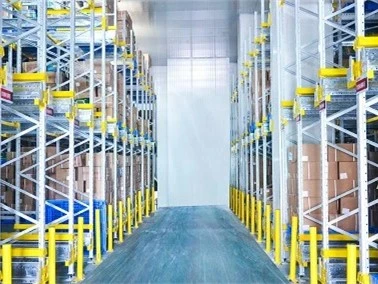
Food & Beverage
Automated or conventional racking storage for raw materials, packaging materials, and finished-product pallets.
View Industry →
Pharmaceutical
Suitable for storing multi-SKU pharmaceutical products, packaging materials, pallets, and totes.
View Industry →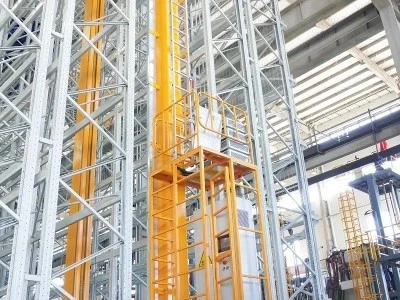
Chemical
Suitable for raw materials and finished-product pallet storage, with further design based on heavy loads and special operating conditions.
View Industry →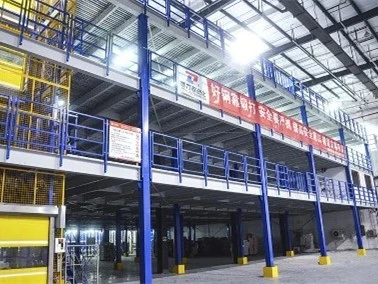
E-Commerce
High-density storage for multi-SKU totes, small items, and order fulfillment operations.
View Industry →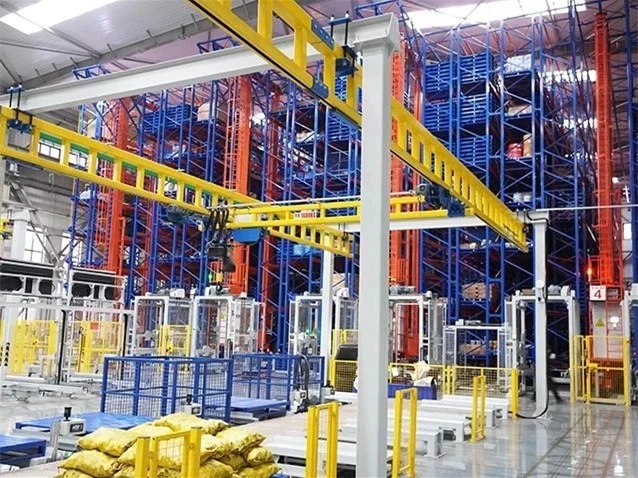
Cold Chain
High-density racking helps reduce unnecessary aisle space inside low-temperature warehouses.
View Industry →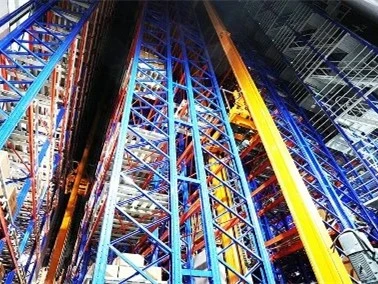
Precision Manufacturing
Suitable for pallet and tote storage of components, WIP, tools, and finished products.
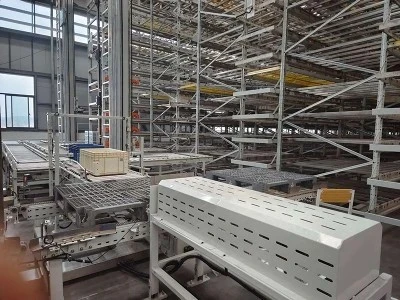
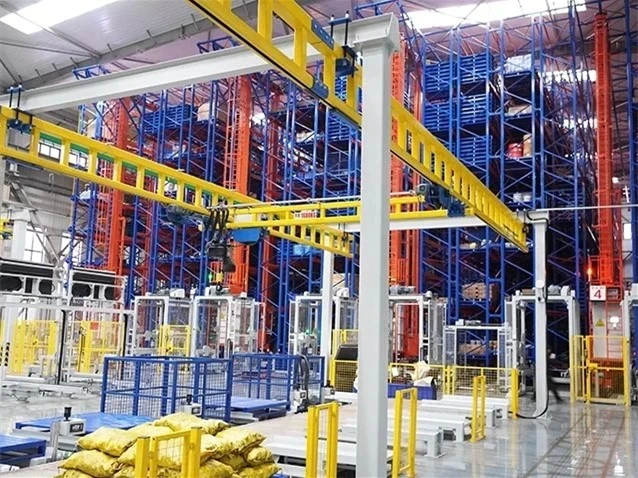
Battery Material
Suitable for high-bay and heavy-load pallet storage of raw materials, WIP, and finished products.
View Industry →
More Industry Applications
Explore more DELIECN racking applications across manufacturing and warehousing environments.
Explore More →FAQ | Frequently Asked Questions About Warehouse Racking
Q: 1. What is the main difference between AS/RS Racking and conventional Storage Racking?
A: The biggest difference is not the racking height. It is what performs the storage and retrieval.
AS/RS Racking works with automated equipment such as shuttle robots, stacker cranes, and Mini-FlyBox. The racking also forms part of the equipment operating and storage environment.
Storage Racking Systems are mainly designed for forklift or manual storage and retrieval.
Q: 2. How do I choose between Pallet Shuttle Robot Racking and Pallet Stacker Crane Racking?
A: If the priority is deep-lane, high-density pallet storage, Pallet Shuttle Robot Racking can be considered first.
If there are more SKUs and direct access to different pallet locations in a high-bay warehouse is required, Pallet Stacker Crane Racking can be considered first.
The final choice still depends on the SKU structure, storage depth, throughput, and building conditions.
Q: 3. Can an existing warehouse be converted to automated racking?
A: It can be evaluated, but not every existing warehouse is suitable for direct conversion.
The first step is to check the building clear height, column grid, fire protection, floor conditions, existing racking, and logistics aisles.
Based on these conditions, the project can then be evaluated for stacker cranes, shuttle robots, or other automation solutions.
Q: 4. What information should I provide before requesting a quotation?
A: It is best to prepare at least:
Warehouse L × W × H
Pallet / Tote Dimensions
Maximum Load
SKU Quantity
Required Storage Locations
Daily / Peak Throughput
Warehouse Layout
If the racking type has not yet been determined, these basic details can be provided first so that the appropriate racking and automation solution can be evaluated.
DELIECN is one of the most reliable warehouse racking manufacturers and suppliers in China, our products have good reputation in the market. Please rest assured to wholesale high quality warehouse racking at competitive price from our factory. Contact us for more details.