Why the Right Automation Strategy Matters More Than the Equipment Itself
When companies start planning a warehouse automation project, the discussion often begins with equipment.
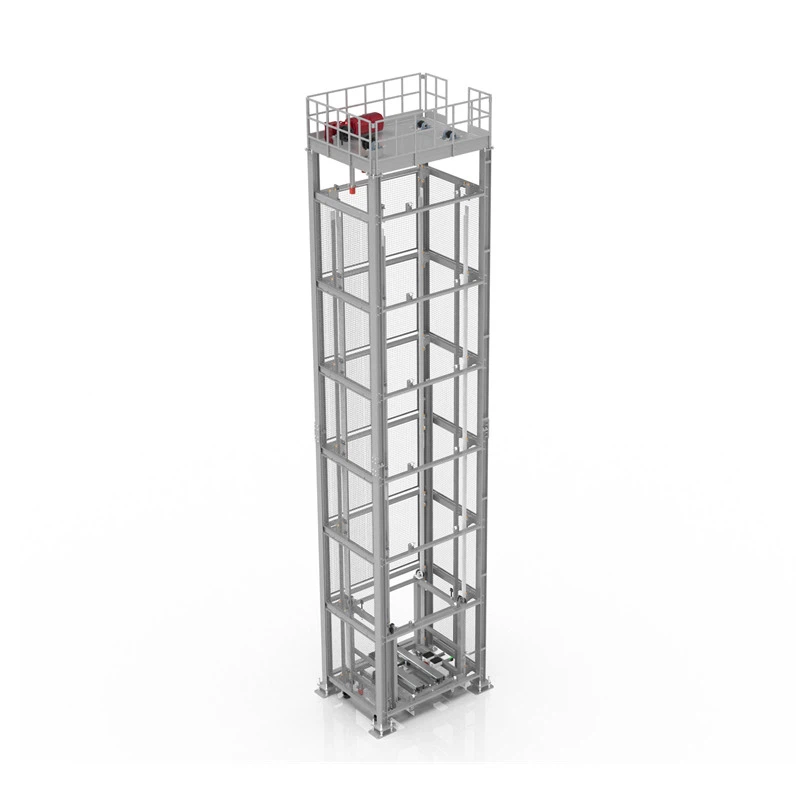
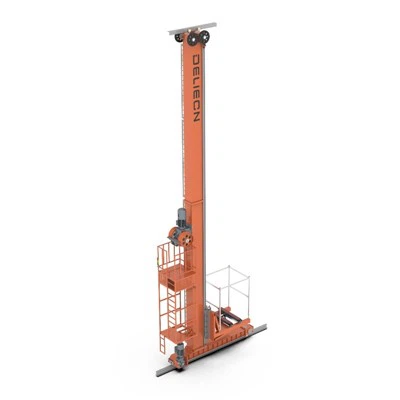
Should we choose a stacker crane?
Should we use shuttle robots?
Is a tote automation system suitable for our operation?
After working with manufacturing, automotive, healthcare, and logistics companies on warehouse automation projects, we found that equipment selection is rarely the biggest challenge.
The more important question is:
Does the selected automation technology match the actual warehouse operation?
A warehouse storing 40,000 pallets of raw materials, a spare parts center managing 45,000 SKUs, and a pharmaceutical warehouse requiring strict traceability may all need automation, but the solutions behind them can be completely different.
Successful warehouse automation starts from understanding the material flow, storage characteristics, and operational requirements before selecting equipment.
What Companies Should Consider Before Automating a Warehouse
Storage Density Is Only One Part of the Decision
Many companies initially consider automation because they want to store more products in a limited space.
This is an important factor, but it is not the only one.
During project planning, engineers usually evaluate:
- Storage frequency;
- Inbound and outbound volume;
- Future expansion possibilities.
For example, a high-density pallet warehouse may benefit from shuttle-based storage, while a production warehouse requiring stable material supply may require a different approach.
The highest storage density solution is not always the most suitable solution.
Product Characteristics Determine the Automation Method
One of the most common mistakes in warehouse automation is applying the same technology to different products.
A pallet containing chemical materials and a tote containing electronic components have completely different handling requirements.
For pallet applications, companies usually consider:
For small-item applications, common choices include:
The role of an experienced ASRS manufacturer is not simply providing equipment, but helping customers select the technology that fits their operation.
How Different ASRS Technologies Solve Different Warehouse Challenges
Pallet ASRS: Reliable Storage for Heavy Loads
Pallet ASRS is commonly used when warehouses handle large quantities of palletized products.
In these applications, reliability and stability are often more important than extreme flexibility.

Stacker Crane ASRS
Stacker cranes operate in dedicated aisles and automatically complete pallet storage and retrieval.
They are widely applied in:
- Manufacturing plants;
- Food and beverage warehouses;
- Chemical industries;
- Distribution centers.
Their advantages include:
- High storage density;
- High throughput;
- Stable continuous operation.

Pallet Four-Way Shuttle
For warehouses requiring higher storage density and more flexible movement, pallet four-way shuttle technology provides another option.
Unlike traditional fixed-path equipment, four-way shuttle robots can move horizontally and vertically within the storage system.
In a new baterry material warehouse project, DELIECN deployed more than 30 pallet four-way shuttle robots in a 21-meter-high warehouse with nearly 40,000 storage locations.
The project challenge was not only handling pallets weighing more than one ton.
The key challenge was coordinating:
- Multiple robots;
- Lifting equipment;
- Storage tasks;
- Production supply requirements.
Through WCS scheduling, the system dynamically coordinates equipment status and task priorities to maintain stable operation.
Tote ASRS: Supporting Multi-SKU and Fast Order Operations
Small-item warehouses often face a different challenge.
The difficulty is not pallet weight but the combination of:
- Large SKU numbers;
- Frequent picking;
- Short response time.
This is why several tote automation technologies exist.

Tote Shuttle Robot: For High Throughput and Scalable Storage
Tote Shuttle Robot systems use multiple robots operating inside storage racks to move totes automatically.
They are suitable for:
- Automotive spare parts;
- E-commerce fulfillment;
- Pharmaceutical distribution;
- Manufacturing components.
The main advantage is scalability.
When business volume increases, additional robots and storage levels can be added without completely redesigning the warehouse.

Mini-Load ASRS: For Stable Medium-Load Storage
Mini-Load ASRS uses stacker crane technology for tote and carton storage.
It is often selected when customers require:
- Higher load capacity;
- Greater storage height;
- Stable automated operation.
With typical load capacities above 50 kg and heights up to approximately 24 meters, Mini-Load is suitable for industrial components and manufacturing material storage.
Mini-FlyBox: For Fast Small-Part Picking
Mini-FlyBox focuses on another type of warehouse requirement:
High-speed access to lightweight materials.
Compared with traditional Mini-Load systems, Mini-FlyBox is designed for faster goods-to-person operations, especially in warehouses below 12 meters.
A typical application is automotive spare parts logistics.
In Toyota's spare parts warehouse project, DELIECN faced a challenge common in the automotive industry:
How to efficiently manage nearly 45,000 SKUs with different sizes, turnover rates, and picking frequencies.
For small and frequently requested parts, DELIECN deployed:
- 18 Mini-FlyBox robots;
- More than 17,000 tote locations;
- Goods-to-person picking stations.
The system reduced unnecessary walking and searching during picking operations.
For palletized parts, pallet four-way shuttle technology was used together, creating a combined automation model for different material categories.
This project shows an important principle:
A complex warehouse usually does not need one automation technology.
It needs the right combination of technologies.
Why Software Capability Matters in ASRS Projects
During warehouse automation implementation, equipment is visible, but software determines how efficiently the system operates.
A modern ASRS usually follows this architecture:
ERP/MES → WMS → WCS → Automation Equipment
WMS manages inventory information and warehouse tasks.
WCS coordinates equipment execution, including:
- Shuttle robots;
- Stacker cranes;
- Conveyors;
- Lifters.
In multi-equipment warehouses, the ability to coordinate different devices becomes critical.
A warehouse with several automation systems can only achieve stable operation when hardware and software work as one system.
Choosing an ASRS Partner: What Really Matters?
From practical project experience, companies should evaluate more than product specifications.
A capable ASRS partner should have:
- Engineering Experience: Can the supplier understand different warehouse scenarios?
- Equipment Development Capability:Can the company independently develop and manufacture core automation equipment?
- Software Capability:Can the supplier coordinate equipment through WMS/WCS?
- Project Experience:Has the company delivered similar applications?
- Long-Term Support:Can the supplier provide spare parts and technical assistance after delivery?
These capabilities determine whether automation can operate reliably after installation.
Conclusion: Automation Starts with Understanding the Warehouse
Warehouse automation is not about selecting the most advanced equipment.
It is about understanding the warehouse operation and selecting technology that solves the actual problem.
From pallet four-way shuttle systems for high-density storage to Mini-FlyBox solutions for fast small-part picking, each ASRS technology has its own application value.
With experience in warehouse planning, automation equipment development, software systems, and real project implementation, DELIECN works with customers and partners to build practical and scalable warehouse automation solutions.