Warehouse height, pallet compatibility, tote handling frequency and picking requirements all influence equipment selection. At Logis-Tech Tokyo 2026, DELIECN brought these practical considerations into focus through live demonstrations of its Ultra-Thin Pallet Four-Way Shuttle Robot, Dual-Station Tote Four-Way Shuttle Robot and Mini-FlyBox.
Held at Tokyo Big Sight and concluding on September 11, the exhibition gave visitors to Booth E7-ZG03 an opportunity to see the equipment in operation and discuss how different configurations could serve their projects.
DELIECN products also appeared beyond its own booth. Two partners each exhibited DELIECN pallet shuttle robot systems at the same show, with coverage by Japanese logistics publicationLNEWS. This broader presence connected DELIECN equipment with partners' system offerings, giving customers more opportunities to explore its application in warehouse automation.
Pallet Storage: Making More of the Available Height
In a warehouse with limited clear height, the vertical space occupied by handling equipment affects how storage levels can be arranged. A compact shuttle gives planners greater flexibility, particularly when the available building height is fixed.
The DELIECN Ultra-Thin Pallet Four-Way Shuttle Robot features a body height of just 125 mm, a load capacity of up to 1,500 kg and a travel speed of up to 120 m/min. It is compatible with more than 95% of common pallet specifications, providing flexibility across different pallet handling requirements.
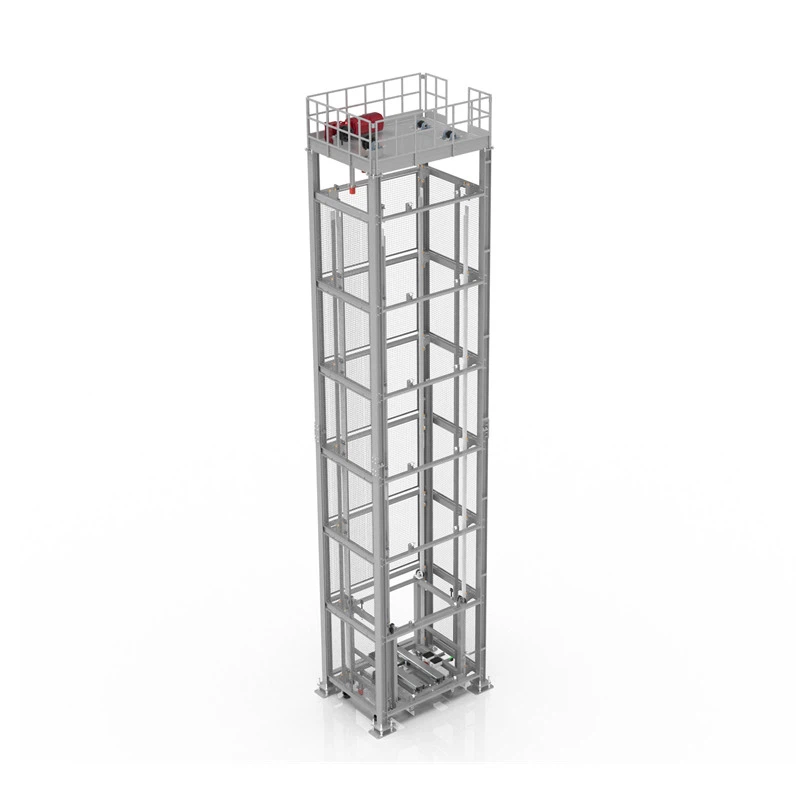
Its four-way movement and automatic rail switching allow travel across connected storage aisles. Combined with lifters, the system supports movement between levels, enabling shuttle deployment to be planned around storage layout and throughput requirements.
The value of the thin design extends beyond the robot itself: it creates more room for storage planning. Actual capacity gains depend on pallet dimensions, load height, clearances and the racking configuration-factors that need to be assessed together for each project.

Tote Handling: Completing More Work in Each Cycle
For warehouses managing many SKUs and frequent retrieval requests, storage density is only part of the challenge. The system must also move totes through storage and picking operations efficiently.
The Dual-Station Tote Four-Way Shuttle Robot can handle two totes in one cycle. Its dual-station design also shortens handling time for second-depth storage positions, making it particularly relevant to projects that combine dense storage with frequent inbound and outbound movements.
The robot supports eight operating modes covering storage, retrieval and in-rack rearrangement. This flexibility allows handling strategies to accommodate different tote positions and task combinations. Depending on the operating mode and application conditions, operational efficiency can improve by approximately 80%–90%.
For project planning, the useful question is how often the actual workload can take advantage of paired tote handling. Order profiles, storage allocation and workstation demand all influence the benefit achievable in daily operation.

Mini-FlyBox: Connecting Dense Storage with Picking
Mini-FlyBox addresses another common requirement: storing a broad range of small items while keeping them accessible for frequent picking.
Designed for multi-SKU storage and retrieval, it can operate in aisles as narrow as 860 mm and work with Tote AMRs, conveyors and goods-to-person workstations. This allows storage and picking areas to be connected according to the building layout and material flow.
For customers, the planning focus is the complete route from storage location to workstation. Compact storage is most useful when totes can reach operators at a rate that supports their picking workload. Mini-FlyBox offers an additional equipment option for balancing these requirements within limited space.

Working with Partners to Serve Local Projects
The presence of DELIECN pallet shuttle systems at two partner booths added a practical dimension to the exhibition. Visitors could explore both the equipment itself and how partners incorporate it into their warehouse offerings.
For integrators, equipment selection must fit the wider project: building constraints, material flows, software interfaces, installation requirements and long-term operation. DELIECN contributes its pallet and tote equipment portfolio and in-house software capabilities, while partners bring their knowledge of local customers and project requirements.
Throughout the exhibition, DELIECN exchanged ideas with customers and partners from Japan and other markets on product selection, equipment combinations and application needs. These discussions help connect product capabilities with the conditions that determine project performance.
DELIECN welcomes collaboration with integrators worldwide. Together, we aim to serve customers with high-quality pallet and tote solutions, combining our equipment and software capabilities with partners' local expertise and project delivery experience.