

Replenishment Is Often Where Warehouse Efficiency Breaks Down
In many high-SKU warehouses, the problem is not that inventory is unavailable. The problem is that inventory cannot reach the right place at the right time.
Picking stations wait for replenishment. Operators search for goods manually. Fast-moving SKUs run short during peak hours. Slow-moving items occupy valuable front-end space. In some warehouses, the system shows that stock exists, but the operation still struggles to move it quickly enough to support orders.
This is why replenishment has become one of the most important issues in modern warehouse automation.
For e-commerce, pharmaceuticals, electronics, automotive spare parts, retail distribution, and manufacturing line-side supply, replenishment is no longer a simple movement from storage to picking. It is a continuous flow that must be planned, triggered, tracked, and adjusted in real time.
A tote shuttle ASRS helps make that flow faster, more visible, and more controllable.
From Manual Replenishment to System-Driven Flow
Traditional replenishment depends heavily on people. Workers check stock, search locations, move totes, deliver goods to picking areas, and return unused items. This process may work at a small scale, but it becomes unstable when SKU quantity grows and order frequency increases.
A tote shuttle ASRS changes the logic.
Instead of waiting for workers to find and move goods, the system automatically stores totes in high-density racking and retrieves them according to order demand, inventory rules, workstation needs, or replenishment priorities.
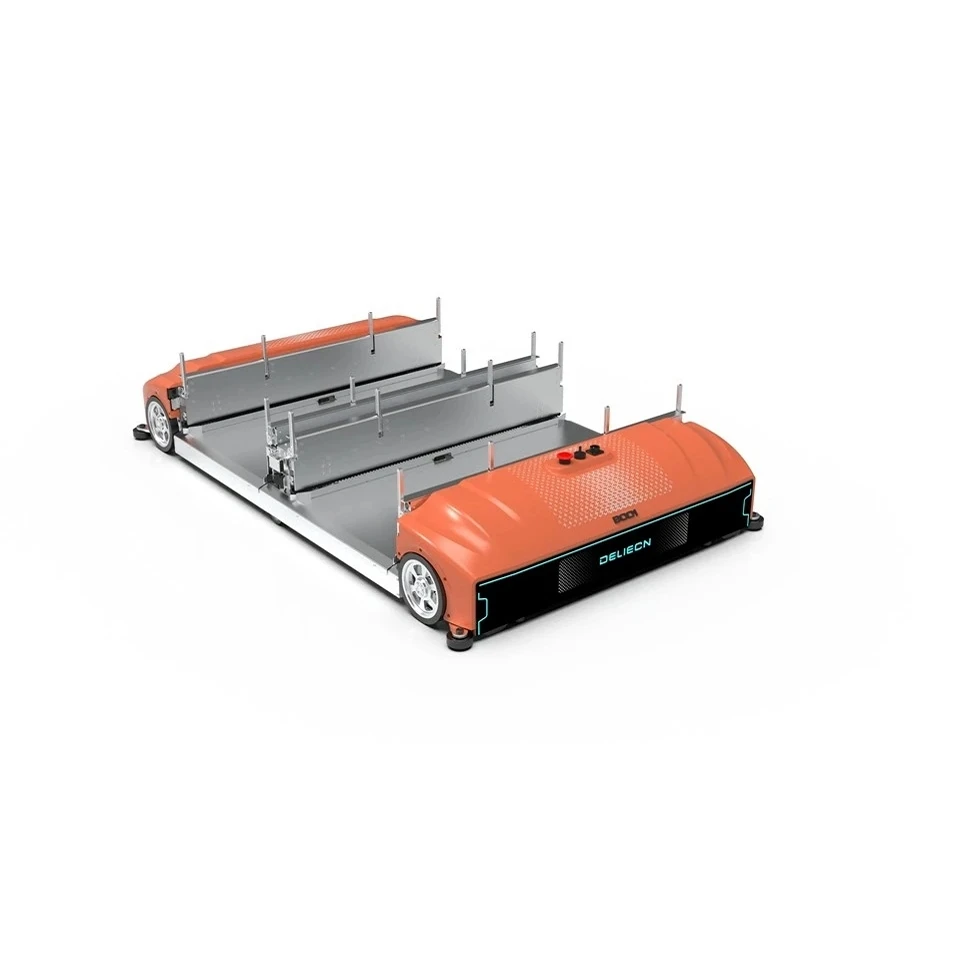
The shuttle robot handles horizontal movement inside the rack. The tote lifter transfers totes between levels. Conveyors send totes to replenishment stations, picking workstations, or buffer areas. WMS manages inventory and replenishment rules. WCS coordinates robots, lifters, conveyors, and workstations in real time.
The result is not just faster movement. The result is a more stable replenishment rhythm.
Why This Matters for Customers
For customers, replenishment efficiency affects much more than one warehouse process.
When replenishment is slow, picking stations wait. When picking stations wait, order fulfillment slows down. When replenishment is inaccurate, wrong SKUs may reach the wrong area, creating rework and inventory discrepancies. During peak seasons, these small delays can become serious bottlenecks.
A tote shuttle ASRS helps customers solve several practical problems.
It reduces the time workers spend walking, searching, and manually moving totes. It improves the visibility of tote locations and stock status. It allows replenishment tasks to be triggered based on actual demand instead of manual judgment. It also helps keep high-frequency SKUs moving between storage and front-end operations without overloading the picking area.
For high-SKU operations, this is especially valuable. The warehouse does not need to keep every SKU close to the picking area. Instead, the system can retrieve the right tote when needed and return it after the task is completed.
WMS/WCS Is the Key to Smarter Replenishment
The real value of tote shuttle ASRS depends on software coordination.
WMS decides what should be replenished, when it should be replenished, and which inventory rules should be followed. This may include safety stock, batch management, FIFO, FEFO, order priority, or workstation demand.
WCS decides how the task is executed. It assigns shuttle robots, coordinates tote lifters, controls conveyor flow, manages workstation supply, and monitors equipment status.
When WMS and WCS work together, replenishment becomes more than a manual request. It becomes a controlled system process.
For example, when a picking workstation is about to run short of a high-demand SKU, the system can create a replenishment task in advance. The shuttle retrieves the required tote, the lifter transfers it to the correct level, and the conveyor delivers it to the workstation or buffer area. After picking or replenishment is completed, the tote can be returned to storage automatically.
This helps reduce waiting time and keeps the operation moving.
Replenishment Efficiency Depends on the Whole System
A common misunderstanding is that replenishment efficiency depends mainly on the speed of the shuttle robot.
In real projects, the bottleneck may appear somewhere else. The shuttle may be fast, but if the tote lifter cannot keep up, totes will wait. The lifter may be fast, but if the conveyor or workstation layout is not balanced, the system will still queue. The equipment may all perform well, but if WCS scheduling is not optimized, robots may travel unnecessarily or compete for the same transfer points.
That is why customers should evaluate tote shuttle ASRS as a complete system.
A good replenishment design should consider storage density, shuttle quantity, lifter capacity, conveyor layout, workstation rhythm, tote buffer strategy, software rules, and future expansion. Only when these parts are designed together can the system deliver stable replenishment performance.
How DELIECN Supports Replenishment Automation
DELIECN supports tote-based warehouse automation with a full range of core equipment and software capabilities, including tote shuttle robots, tote lifters, conveyors, workstations, ASRS racking, WMS/WCS, API integration, and 3D visualization.
This matters because replenishment is not completed by one piece of equipment. It depends on how storage, retrieval, lifting, conveying, picking, and software scheduling work together.
With around 90% of core hardware and software developed and manufactured in-house, DELIECN can support more consistent equipment matching, clearer interface control, and smoother project coordination. For customers, this helps reduce the risk of equipment mismatch, software communication problems, and unstable handover between different system sections.
For high-SKU warehouses, DELIECN can help design replenishment logic based on real operational needs, such as SKU structure, tote size, order profile, workstation demand, peak throughput, and system interface requirements.
Conclusion
Tote shuttle ASRS improves goods replenishment not simply by moving totes faster, but by making replenishment more predictable, visible, and controllable.
For customers, the real value is fewer manual movements, less waiting at picking stations, better inventory accuracy, faster response to order demand, and more stable performance during peak periods.
In modern warehouses, replenishment should not depend on workers searching and reacting after shortages occur. It should be driven by data, coordinated by WMS/WCS, and executed by a connected automation system.
That is where tote shuttle ASRS creates long-term value.
Follow DELIECN on LinkedIn for more warehouse automation insights, project updates, and ASRS solution guides.


