

Yes, but there is an important distinction.A warehouse can operate 24/7 without every Pallet Shuttle Robot moving 24 hours a day.That sounds contradictory until you look at what happens in a real factory.At two o'clock in the morning, production may still be releasing finished pallets. One shuttle could be charging. Another may have been taken out for inspection. A Lifter may be occupied moving an outbound pallet while several inbound tasks are waiting.The customer does not really care whether every robot is running.What matters is whether production can still send pallets into storage and whether the warehouse can still release the goods needed by the next process.That is the standard a 24/7 shuttle system has to meet.
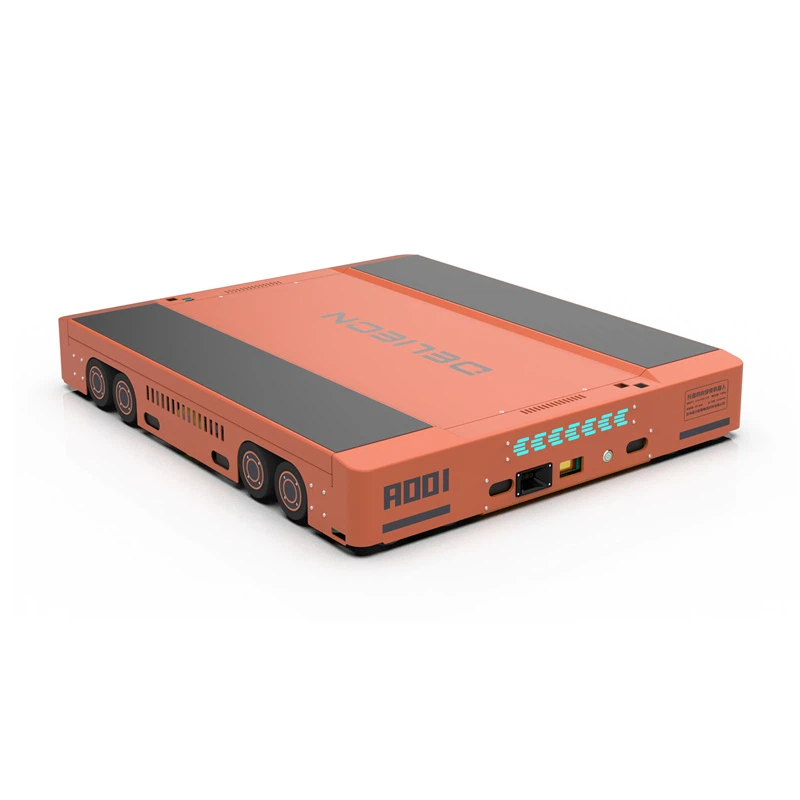
Continuous Operation Is Mostly About What Happens When Something Is Unavailable
During a demonstration, all equipment is normally ready.A three-shift warehouse is different.Robots need charging. Mechanical parts need inspection. A sensor may require adjustment. Pallets do not always arrive in perfect condition. Demand is also uneven: an apparently quiet night shift can suddenly receive a block of finished pallets from production.A 24/7 design therefore cannot be built around the assumption that every device will always be available.This is where a multi-shuttle system has an advantage.If one shuttle is charging, the remaining vehicles can continue working. If another unit is temporarily taken out of service, WCS can distribute accessible tasks among the available fleet.But the number of robots alone does not tell you whether this works.Imagine six shuttles sharing one heavily used Lifter. All six may be healthy, yet the warehouse can still develop a queue around the same vertical transfer point.Add a seventh shuttle and the problem may not improve.The new robot simply reaches the queue faster.
For 24/7 projects, the more useful calculation is therefore not maximum shuttle speed. It is how the complete system behaves when one part of the available capacity disappears.
How much work can still be completed?Which storage areas remain accessible?Can production continue feeding the warehouse?Those are much closer to the questions an operations manager will be asking at 3 a.m.
Charging Should Disappear Into the Operating Rhythm
Customers sometimes ask how long a Pallet Shuttle Robot can operate before charging.That number matters, but it can also be misleading.A robot does not need enough battery capacity to work an entire day without interruption if charging is already built into the operating cycle.In a multi-robot system, vehicles can charge at different times.The important part is timing.If too many robots charge before an outbound peak, the warehouse loses useful capacity at exactly the wrong moment. If the system knows when workload is lower, charging can be distributed around those periods.This becomes more noticeable in factories where material flow follows production rather than a fixed warehouse schedule.Finished goods may arrive in waves after a production batch. Outbound preparation may become heavier several hours later. The available shuttle fleet should follow that changing workload instead of operating on a rigid charging routine.That is less about battery technology than it is about understanding the operation.
YFY Is a Useful Example Because the Warehouse Does Not Work in Isolation
One DELIECN project in Nanjing shows this quite clearly.
YFY adopted a "store above, pick below" arrangement rather than treating the automated warehouse as a separate storage block.
Seven Pallet Four-Way Shuttle Robots work in the upper storage area. The wider material flow also uses 14 Pallet Latent AMRs, two Fork AMRs and four Lifters.
The project has approximately 2,700 pallet locations and supports stable 24/7 operation.
What makes the application interesting is not simply that the shuttles can operate overnight.
The factory keeps moving material across floors and between processes. The broader logistics system handles more than 3,000 pallet transfers per day, so storage has to remain available while those movements continue.
The shuttle is only responsible for the part of the journey where it makes sense.AMRs handle flexible movement outside the rack. Lifters connect different levels. Shuttle robots deal with pallet storage and retrieval.That division is important.A 24/7 warehouse becomes harder to keep running when one equipment type is expected to do too much.Sometimes the better design is the one where each machine has a narrower job.
Maintenance Does Not Disappear Because the Warehouse Runs All Day
This is probably the least glamorous part of 24/7 automation, but one of the most important.A system that runs continuously still needs to be inspected.The practical issue is whether inspection can happen without stopping everything else.If a shuttle needs attention, can it be removed from the operating area without blocking the remaining fleet?Are frequently replaced parts accessible?Does the maintenance team know which alarms require immediate intervention and which conditions can wait for a planned service window?Is there enough spare capacity to keep critical material moving while maintenance is taking place?A supplier promising "continuous operation" should be able to discuss these situations in detail.Simply saying that the robot is designed for 24/7 use is not enough.
There is a large difference between equipment that can operate continuously and a warehouse that can remain operational while equipment is being maintained.
The second one is harder.
Night Shift Also Exposes Weak Pallet Control
There is another issue that becomes more visible in unattended or lightly staffed shifts: pallet condition.During the day, an experienced forklift operator may notice that a pallet board is damaged or that a load is leaning slightly and stop it before it reaches the rack.Automation has less tolerance for informal judgment.A damaged pallet entering a dense automated rack can create a much larger problem than the same pallet sitting on the warehouse floor.For 24/7 operation, pallet inspection and load standards become part of system availability.The goal is to catch the exception before it travels deep into the warehouse.This sounds like a small detail compared with robots and software.In daily operation, small details are often what interrupt the night shift.
What 24/7 Really Means
A Pallet Shuttle Robot Racking system can support 24/7 operation, and there are already factories doing exactly that.But the phrase should be interpreted carefully.It does not mean one shuttle runs endlessly without charging.It does not mean equipment never needs maintenance.And it certainly does not mean the warehouse will never experience an abnormal pallet, alarm or temporary loss of capacity.A genuine 24/7 design assumes those things will happen.The system is prepared to continue working around them.
That is why, when evaluating a shuttle project for three-shift production, I would pay less attention to the sentence "supports 24/7 operation" on a product page and more attention to what happens when the warehouse is no longer operating under perfect conditions.
One shuttle is charging.Another is being inspected.Production is still releasing pallets.An outbound order has just become urgent.
Can the warehouse keep material moving?
If the answer is yes, then 24/7 is no longer a product specification.It is an operating capability.


