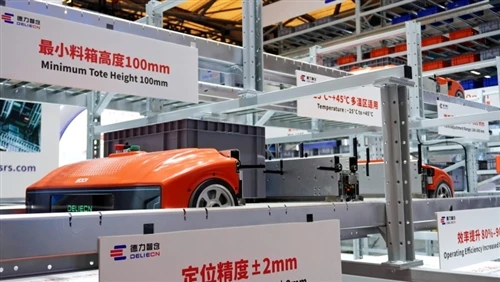
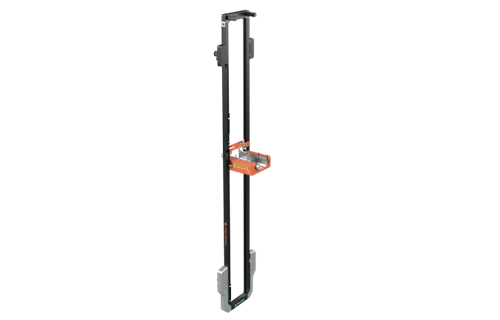
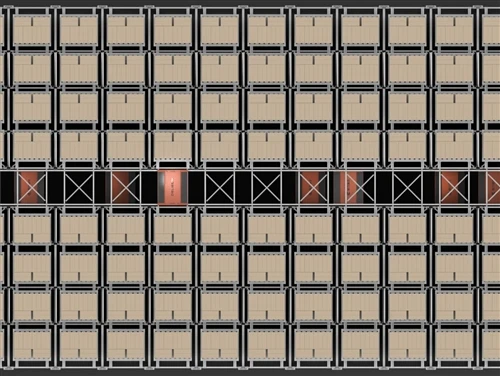
If you're knee-deep in warehouse automation, you've probably heard about Pallet Four-Way Shuttle Robots-they're the workhorses that make high-density storage way less of a headache. But here's the thing I get asked at least once a week by warehouse managers, automation integrators, and even other robot vendors: "What's the speed adjustment range of these things?" It's not a one-size-fits-all answer, honestly, and I've spent years refining how I explain this because getting the speed right can make or break a warehouse's throughput, safety, and even their utility bills. As someone who's been in the material handling robot game for a decade, and runs the team that builds and supports these Pallet Four-Way Shuttle Robot for clients across industries, I'm breaking this down like I would with a new client over coffee-no fancy jargon, just the real details.
First, let's get one thing straight: speed adjustment for these robots isn't a random dial you crank up and down. It's a carefully calibrated balance between moving pallets fast enough to hit peak throughput, slow enough to avoid crashes or damage, and tailored to the specific space the robot's working in. Unlike some older automated guided vehicles (AGVs) that only go a fixed speed, four-way shuttles can move forward, backward, left, right-hence "four-way"-so their speed adjustments account for both straight-line travel and the trickier lateral moves, which are way tighter in narrow aisles.
Let's start with the baseline, because that's what most people care about first. When these robots are moving empty or loaded pallets down a straight aisle (that's their most efficient path), the standard maximum speed is usually between 1.8 to 2.2 meters per second-wait, before you say that's too fast, hold on. That's for unobstructed, straight runs, and even then, the default max is set lower for new clients until we run a site audit. But here's the key part: the adjustment range isn't just max speed. It's from minimum crawl speed for maneuvers to that max straight-line speed. Most clients don't realize the min speed is around 0.2 meters per second, but that's non-negotiable for when they're pulling into a rack spot, avoiding another shuttle, or navigating a super tight corner in a narrow aisle.
Now, why such a wide range? Let's talk use cases, because that's where speed adjustments actually matter. If you're in a standard ambient warehouse, you can crank the top speed up a bit to keep up with order picking cycles. But if you're in a cold storage facility, like our [Cold Storage Pallet Shuttle Robot] clients, you can't run full speed. The cold (we're talking -20°C to -30°C) makes the robot's motors stiffer, the battery drains faster, and visibility for safety scanners isn't as good-so we cap the max speed there at 1.2 to 1.5 meters per second, and push the min speed a bit higher to prevent stalling on ice or condensation on the floor.


Wait, let's compare that to similar shuttle types to put it in perspective. Our Pallet Two-Way Shuttle Robot can only move forward and backward, no lateral moves, so their speed range is narrower-usually 2 meters per second straight, no lateral adjustments needed. The Pallet Parent Child Shuttle Robot system is a bit different too: the "parent" shuttle moves along the main aisle rail, maxing out around 3 m/s, while the smaller "child" that drops into the rack lanes tops out at 2 m/s because it's navigating tighter slot spaces. So four-way shuttles are the middle ground here, but their multi-directional capability means their speed adjustment is more granular.
Now, how do we actually adjust that speed? It's not something you have to tune every day, thank goodness. The system is pre-programmed during installation based on three big factors: site layout, pallet weight, and safety protocols. Let's break that down. Pallet weight is another big one: an empty pallet is light, so we can let it hit 2 m/s no problem, but a full pallet of heavy machinery parts (up to 1,500 kg, by the way) means we cap speed at 1.7 m/s to keep movement smooth and avoid straining the motor or tipping the load.
Acceleration and deceleration are part of the speed range too, and that's something almost no one mentions. When you adjust the software to move the shuttle, how fast it ramps up to top speed, and how fast it stops, is just as important as the max speed. For ambient warehouses, acceleration can be up to 1 m/s², so the shuttle gets moving quickly. For cold storage or hazardous areas, that acceleration is cut to 0.3 to 0.5 m/s² to keep the robot stable and comply with safety rules. That's a key part of the "adjustment range" I always see people leaving out-speed isn't just top end, it's how you get there.
I get asked all the time: can I adjust this on the fly if my order volume spikes? The short answer is yes, but only within the calibrated range for your site. The robot's control software lets you tweak speeds remotely-if you're doing a big inventory count and need the shuttles to move a bit faster for a shift, you can bump the max straight-line speed by 0.2 m/s, as long as your aisles are clear and your load weights are consistent. But you can't go above the maximum certified speed for your robot model, because that would void the warranty and create safety risks. We have clients that do this around peak season, and it works as long as they don't push it too hard.
What about common myths here? A lot of people think "faster = better throughput," but that's not true. If your shuttle is going too fast, it has to stop suddenly, which means it takes time to brake and reposition-so you might think you're saving 10 seconds per move, but you actually lose 5 seconds stopping, plus risk damaging the pallet or the rack. Speed adjustment is about matching the robot to your specific space, not just going as fast as possible.
Another thing: battery life ties into speed adjustment. The faster the robot goes, the more power it uses. So if your warehouse has limited charging stations, you might run the shuttles at a slightly lower speed to extend battery life between charges, which cuts down on downtime for swapping batteries.
Now, let's get into the nitty-gritty of the actual range numbers, so you have a clear idea. For a standard, ambient-temperature Pallet Four-Way Shuttle Robot (like the ones we sell), the full speed adjustment range is:
- Straight-line travel: 0.2 m/s to 2 m/s (that's ~0.45 mph to ~4.9 mph, for the US folks who don't use meters)
- Lateral (side-to-side) travel: 0.3 m/s to 2 m/s (~0.67 mph to ~4.0 mph)
- Acceleration/deceleration: 0.1 m/s² to 1m/s² (adjusted based on load and location)
Like I said earlier, this changes for specialized robots. Our cold storage shuttles drop that straight-line max to 2 m/s, to handle the tough conditions. The two-way shuttles we offer top out at 2m/s straight, with no lateral adjustment range needed, since they can't move side to side.
What about safety? All these speed adjustments are tied to the shuttle's safety scanners. If a scanner detects a person walking in front of the shuttle, it automatically slows to 0.1 m/s and stops if needed- that's part of the built-in adjustment, not something you have to program manually. We build those safety limits into every robot before it leaves our facility, so even if you crank the max speed for normal operations, the robot will never go faster than the safety threshold around people or obstacles.
I think the biggest takeaway here is that there's no universal speed adjustment range for Pallet Four-Way Shuttle Robots. It's a custom range tailored to your warehouse's layout, temperature, load types, and safety rules. A lot of automation vendors will give you a one-size-fits-all number, but that's lazy. Our team does a full site audit before we even quote a system, mapping the aisles, checking the rack spacing, testing floor conditions, and looking at how many pallets you need to move per hour, so we can set the perfect speed range for your needs.
If you're thinking about adding these robots to your warehouse, don't just ask "how fast do they go?" Ask about the adjustment range, how it will be calibrated for your space, and what safety limits are built in. We've helped clients from e-commerce fulfillment centers to food manufacturing plants get the speed dialed in right-cutting their order picking time by 30% in some cases, without any safety incidents or damage to their inventory.
At the end of the day, these robots are built to work for your operation, not the other way around. The speed adjustment range is just one part of that customization, but it's a critical one. If you're ready to talk through what your warehouse needs, our team can walk you through how we calibrate these ranges, compare it to other shuttle types like the two-way or parent-child models, and even show you case studies of clients we've helped. No pressure, just real talk about making your material handling work smoother.
References
- Material Handling Industry Association. (2023). Automated Pallet Shuttle Systems: Design, Performance, and Application Standards. MHIA Press.
- Robotic Industries Association. (2022). Safety Standards for Mobile Industrial Robots (AMRs) in Warehouse Environments. RIA Technical Report.
- Cold Storage Association International. (2021). Automated Equipment Performance in Low-Temperature Warehouse Conditions. CSAI White Paper.
- National Fire Protection Association. (2020). NFPA 70: National Electrical Code, Article 500 (Hazardous Locations). NFPA.
- Pallet Shuttle Robots: Speed Calibration Guidelines, AB Material Handling