

What is the average throughput of a tote shuttle robot system?
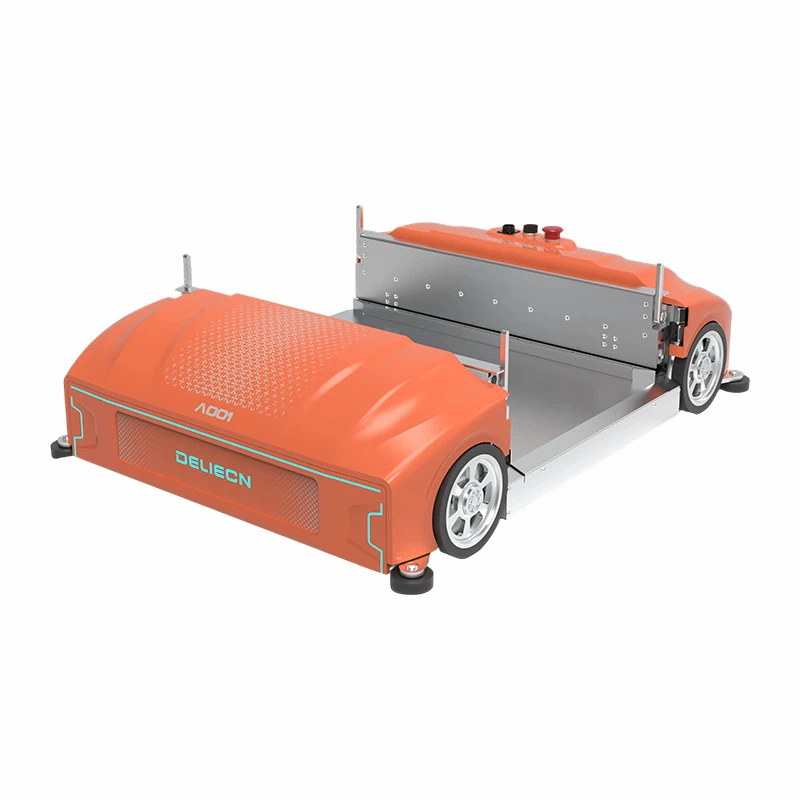

In the dynamic landscape of modern warehousing and logistics, efficiency and productivity are the cornerstones of success. One of the key technologies driving this efficiency is the tote shuttle robot system. As a leading tote shuttle robot supplier, we understand the importance of understanding the average throughput of such systems. Throughput is a critical metric that directly impacts the overall performance and profitability of a warehousing operation.
Understanding Tote Shuttle Robot Systems
Tote shuttle robot systems are automated material handling solutions designed to move totes, which are small containers used for storing and transporting goods, within a warehouse. These systems consist of a network of shuttle robots that operate on tracks or in a grid-like structure, allowing them to move horizontally and vertically to access different storage locations. The shuttles are typically controlled by a central management system that coordinates their movements and tasks.
There are different types of tote shuttle robots available in the market, each with its own set of features and capabilities. For example, the Tote Four - Way Shuttle Robot is capable of moving in four directions (forward, backward, left, and right), providing greater flexibility and access to storage locations. On the other hand, the Tote Two - Way Shuttle Robot is more suitable for simpler layouts where movement in two directions is sufficient. Additionally, we also offer the Cold Storage Tote Shuttle Robot designed specifically for cold storage environments.
Factors Affecting the Average Throughput
The average throughput of a tote shuttle robot system is influenced by several factors. Understanding these factors is crucial for accurately estimating and optimizing the system's performance.
Robot Speed and Acceleration
The speed at which the shuttle robots can travel and their acceleration and deceleration capabilities play a significant role in determining throughput. Faster robots can cover more distance in less time, allowing them to pick and place totes more quickly. However, it's important to balance speed with accuracy to avoid collisions and errors. Our high - end shuttle robots are engineered to achieve optimal speed and acceleration while maintaining the highest level of precision.
System Configuration and Layout
The layout of the warehouse and the configuration of the tote shuttle robot system also impact throughput. A well - designed layout with efficient racking systems and clear traffic paths can minimize the travel time of the robots. For example, a dense storage layout with high - bay racks can increase the storage capacity but may require more complex movements from the robots. Our team of experts can work with you to design a system layout that maximizes throughput based on your specific warehouse space and requirements.
Task Complexity
The complexity of the tasks assigned to the shuttle robots affects throughput. Simple tasks such as single tote picking and placing are completed more quickly than more complex tasks like multiple tote handling or sorting operations. The central management system needs to optimize task assignment to ensure that the robots are utilized efficiently. Our advanced management software is capable of handling complex task scheduling and routing, ensuring that the system operates at peak efficiency.
Number of Robots
The number of shuttle robots in the system is a direct factor in determining throughput. More robots can generally handle more tasks simultaneously, increasing the overall throughput of the system. However, adding too many robots without proper planning can lead to congestion and inefficiencies. Our experts can help you calculate the optimal number of robots based on your expected throughput requirements and warehouse layout.
Calculating the Average Throughput
The average throughput of a tote shuttle robot system can be calculated by considering the number of totes that can be picked and placed per unit of time. This calculation typically involves the following steps:
- Determine the cycle time: The cycle time is the time it takes for a shuttle robot to complete a single task, including traveling to the storage location, picking up a tote, traveling to the destination, and placing the tote. This time can be measured through testing and simulation.
- Calculate the available operating time: Determine the total amount of time the system will be in operation, taking into account factors such as downtime for maintenance and breaks.
- Estimate the number of robots: Based on the system configuration and requirements, estimate the number of shuttle robots that will be operating.
- Calculate the throughput: Multiply the number of robots by the number of cycles each robot can complete within the available operating time.
For example, if a single shuttle robot has a cycle time of 30 seconds and the system operates for 8 hours a day with a 1 - hour maintenance break (7 hours of available operating time), and there are 10 robots in the system, the calculation would be as follows:
The number of cycles a single robot can complete in 7 hours (25,200 seconds) is (25200\div30 = 840) cycles.
The total throughput of the 10 - robot system is (840\times10 = 8400) totes per day.
Optimizing the Throughput of Tote Shuttle Robot Systems
To achieve the highest possible throughput, continuous optimization of the tote shuttle robot system is essential. Here are some strategies for optimization:
Regular Maintenance
Proper maintenance of the shuttle robots and the system components is crucial to ensure their smooth operation. Regular inspections, cleaning, and replacement of worn - out parts can prevent breakdowns and reduce downtime. Our team provides comprehensive maintenance services to keep your system running at peak performance.
Updating Software
The management software that controls the shuttle robots can be updated to incorporate new algorithms and features for better task scheduling and routing. This can improve the efficiency of the system and increase throughput. We offer regular software updates to our customers to ensure that their systems are always up - to - date.
Staff Training
Well - trained staff can operate the tote shuttle robot system more effectively. Training programs should cover system operation, maintenance, and troubleshooting. Our company provides training sessions for our customers' staff to ensure that they can make the most of our tote shuttle robot systems.
Conclusion
The average throughput of a tote shuttle robot system is a complex metric that is influenced by multiple factors. As a leading tote shuttle robot supplier, we are committed to helping our customers understand and optimize the throughput of their systems. By considering factors such as robot speed, system configuration, task complexity, and the number of robots, and by implementing strategies for optimization, we can help you achieve the highest level of efficiency and productivity in your warehousing operations.
If you are interested in learning more about our tote shuttle robot systems or would like to discuss your specific requirements and throughput goals, we invite you to contact us for a procurement negotiation. Our team of experts is ready to assist you in finding the best solution for your business.
References
- Tompkins, J. A., White, J. A., Bozer, Y. A., & Tanchoco, J. M. A. (2010). Facilities Planning. John Wiley & Sons.
- Boysen, N., Fliedner, M., & Scholl, A. (2009). A classification of batching, zoning and sorting problems in picker - to - part systems. European Journal of Operational Research, 199(2), 315 - 329.


