

As a supplier of Double - Deep Miniload Stacker Cranes, I often get asked about the response time of these machines to commands. It's a crucial aspect, especially for businesses that rely on efficient material handling. So, let's dig into what the response time of a Double - Deep Miniload Stacker Crane to commands really means and what factors influence it.
Understanding the Basics
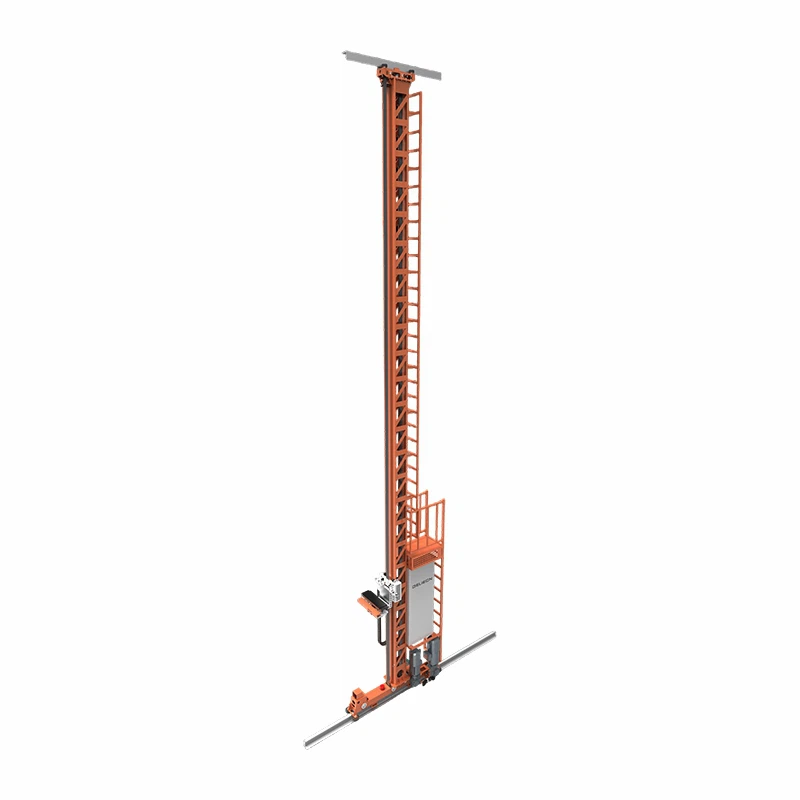
First off, what exactly is a Double - Deep Miniload Stacker Crane? Well, it's a type of automated storage and retrieval system (AS/RS) that's designed to handle small to medium - sized loads. Unlike a Single - Deep Miniload Stacker Crane, which can access items in a single row of storage, a double - deep version can reach two rows deep. This allows for more efficient use of storage space.
The response time of a Double - Deep Miniload Stacker Crane refers to the time it takes for the crane to start executing a command after receiving it. This includes everything from the moment the command is sent to the crane's control system to the point where the crane begins to move towards the target location.
Factors Affecting Response Time
There are several factors that can influence the response time of a Double - Deep Miniload Stacker Crane.

1. Control System
The control system is the brain of the crane. A modern, high - performance control system can process commands quickly and accurately. If the control system is outdated or has a lot of processing load, it can slow down the response time. For example, if the system is handling multiple commands simultaneously, it might take longer to prioritize and execute each one.
2. Communication Protocol
The way the commands are sent to the crane also matters. A reliable and fast communication protocol ensures that the commands are transmitted without delay. If there are issues with the communication, like interference or a slow network, it can add to the response time.
3. Mechanical Design
The mechanical design of the crane plays a role too. A well - designed crane with smooth - moving components can start and stop more quickly. For instance, if the wheels or the lifting mechanism have a lot of friction, it can slow down the initial movement of the crane.
4. Load and Position
The weight and position of the load can affect the response time. If the crane has to handle a heavy load, it might take a bit longer to start moving. Also, if the target location is far away or in a difficult - to - reach position, the crane might need more time to plan its path and start the operation.
Measuring Response Time
To measure the response time of a Double - Deep Miniload Stacker Crane, we usually use a combination of sensors and data logging. Sensors can detect when a command is sent and when the crane starts moving. By recording this data over multiple operations, we can get an average response time.
It's important to note that the response time can vary depending on the specific operation. For example, a simple retrieval command might have a shorter response time compared to a more complex command that involves multiple movements or adjustments.
Importance of Response Time
A fast response time is crucial for several reasons. In a high - volume warehouse, every second counts. A quick response time means that the crane can handle more operations in a given period, increasing the overall productivity of the warehouse. It also helps in reducing the waiting time for other processes that depend on the crane's output.
Moreover, a reliable response time ensures that the warehouse operations run smoothly. If the crane has a long and inconsistent response time, it can lead to delays, bottlenecks, and even errors in the material handling process.
Our Offerings
At our company, we offer Double - Deep Miniload Stacker Cranes with optimized response times. We use state - of - the - art control systems and communication protocols to ensure that the cranes can quickly respond to commands. Our cranes are also designed with high - quality mechanical components to minimize friction and ensure smooth movement.
We also provide Customized Miniload Stacker Cranes to meet the specific needs of our customers. Whether you need a crane with a faster response time for a high - speed operation or a crane with special features for a unique application, we can work with you to design the perfect solution.
Conclusion
In conclusion, the response time of a Double - Deep Miniload Stacker Crane to commands is a critical factor in the efficiency of a warehouse. By understanding the factors that affect it and taking steps to optimize it, we can ensure that our cranes provide the best performance for our customers.
If you're in the market for a Double - Deep Miniload Stacker Crane and want to learn more about how our products can meet your needs, don't hesitate to reach out. We're here to help you find the perfect solution for your material handling requirements.
References
- Some industry - specific whitepapers on automated storage and retrieval systems.
- Technical manuals of Double - Deep Miniload Stacker Cranes.


