

As a supplier of Pallet Parent Child Shuttle Robots, I often receive inquiries about the response time of these remarkable machines to commands. In this blog post, I'll delve into the factors that influence the response time of Pallet Parent Child Shuttle Robots, and why it matters in modern warehousing and logistics operations.
Understanding the Pallet Parent Child Shuttle Robot
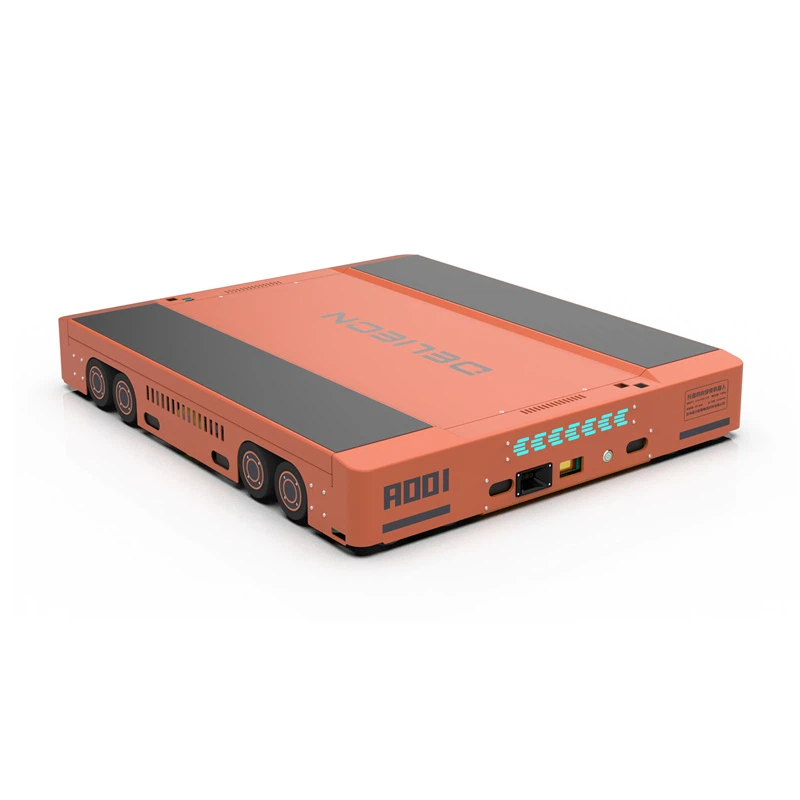
Before we discuss the response time, let's briefly introduce the Pallet Parent Child Shuttle Robot. This innovative piece of equipment is designed to handle palletized goods in high - density storage systems. The parent shuttle moves along the main aisles, while the child shuttles are carried by the parent and can access individual storage locations within the racking system. This dual - level operation allows for efficient storage and retrieval of pallets, optimizing space utilization and improving overall warehouse productivity.
You can learn more about our Pallet Parent Child Shuttle Robot on our website.
Factors Affecting Response Time
1. System Architecture
The architecture of the Pallet Parent Child Shuttle Robot system plays a crucial role in determining its response time. A well - designed system with a reliable communication network between the control center, the parent shuttle, and the child shuttles can significantly reduce the time it takes to receive and execute commands. For example, a system that uses a high - speed Ethernet or wireless communication protocol can transmit commands quickly, minimizing latency.
2. Software Optimization
The software that controls the Pallet Parent Child Shuttle Robot is another key factor. Advanced algorithms can optimize the path planning of the shuttles, reducing the time it takes to reach the target location. For instance, the software can calculate the shortest route for the parent shuttle to move to the desired aisle and then for the child shuttle to access the specific storage slot. Additionally, the software can prioritize tasks based on factors such as order urgency and storage availability, ensuring that critical commands are executed promptly.
3. Hardware Performance
The performance of the hardware components, including the motors, sensors, and controllers, also affects the response time. High - quality motors with fast acceleration and deceleration capabilities can enable the shuttles to start and stop quickly, reducing the time between receiving a command and initiating movement. Accurate sensors can detect the position of the shuttles and the pallets in real - time, allowing for precise control and minimizing errors.
4. Load and Traffic Conditions
The load carried by the shuttles and the traffic conditions within the warehouse can impact the response time. Heavier loads may require more time for the shuttles to accelerate and decelerate, while a high volume of traffic can cause congestion and delays. The system needs to be able to manage these factors effectively, for example, by implementing traffic control algorithms to avoid collisions and ensure smooth operation.
Measuring Response Time
Response time can be measured in different ways, depending on the specific requirements of the application. One common metric is the time from when a command is sent from the control center to when the shuttle starts moving towards the target location. Another important metric is the time it takes for the shuttle to complete the entire task, including moving to the target, picking up or dropping off the pallet, and returning to its initial position.
In a well - optimized Pallet Parent Child Shuttle Robot system, the response time can be as short as a few seconds for simple tasks. However, more complex tasks, such as handling multiple pallets or operating in a congested environment, may take longer.

Importance of Response Time in Warehousing
In modern warehousing and logistics, response time is a critical factor that can directly impact the efficiency and profitability of the operation. A fast - responding Pallet Parent Child Shuttle Robot can reduce the time it takes to store and retrieve pallets, leading to higher throughput and better customer service. For example, in an e - commerce fulfillment center, a quick response time can enable faster order processing and shorter delivery times, enhancing the customer experience.
Moreover, a reliable response time can also improve the overall reliability of the warehouse system. By minimizing the time between commands and execution, the risk of errors and delays is reduced, ensuring that the warehouse operates smoothly and efficiently.
Comparing with Other Pallet Shuttle Robots
We also offer other types of pallet shuttle robots, such as the Pallet Four - Way Shuttle Robot and the Explosion - Proof Pallet Shuttle Robot. Each type of robot has its own advantages and is suitable for different applications.
The Pallet Four - Way Shuttle Robot offers greater flexibility in terms of movement, as it can move in four directions. This allows for more efficient storage and retrieval in complex warehouse layouts. On the other hand, the Explosion - Proof Pallet Shuttle Robot is designed for use in hazardous environments, where safety is of utmost importance.
When comparing the response time of these different types of robots, it's important to consider the specific requirements of the application. For example, in a high - throughput warehouse, a Pallet Parent Child Shuttle Robot may offer a faster response time due to its dual - level operation and optimized software.
Conclusion
The response time of the Pallet Parent Child Shuttle Robot is influenced by a variety of factors, including system architecture, software optimization, hardware performance, and load and traffic conditions. By understanding these factors and optimizing the system, we can ensure that our robots provide a fast and reliable response to commands, meeting the needs of modern warehousing and logistics operations.
If you're interested in learning more about our Pallet Parent Child Shuttle Robot or other material - handling robots, we invite you to contact us for a detailed discussion. Our team of experts is ready to assist you in finding the best solution for your specific requirements.
References
- Industry reports on warehousing automation
- Technical specifications of Pallet Parent Child Shuttle Robots
- Research papers on robotic response time in logistics systems


