

Hey there! I'm a supplier of pallet stacker cranes, and today I wanna chat about the working environment requirements for these nifty machines.
Let's start with the basics. Pallet stacker cranes are essential in warehouses and distribution centers for moving and stacking pallets efficiently. But to make them work at their best, we need to consider a few key aspects of the working environment.
Floor Conditions
First off, the floor is super important. The floor should be flat and level. Uneven floors can cause all sorts of problems for pallet stacker cranes. For example, if the floor has bumps or slopes, it can make the crane unstable. This instability not only affects the safety of the operator but also the accuracy of the stacking process.
A rough floor can also wear out the wheels of the stacker crane faster. You don't want to be replacing wheels all the time, right? So, a smooth and flat floor is a must. If the floor has any cracks or holes, they should be repaired before using the stacker crane. Otherwise, it could lead to breakdowns and costly repairs.
Space Requirements
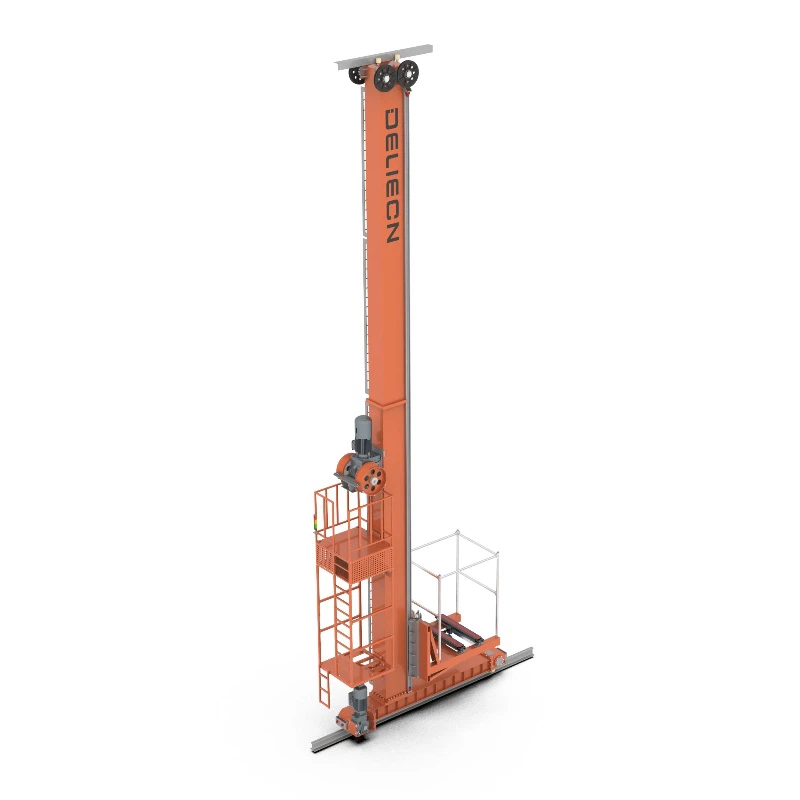
Space is another crucial factor. Pallet stacker cranes need enough room to maneuver. There should be sufficient aisle width. For instance, Single-Mast Pallet Stacker Crane might require a narrower aisle compared to a Double-Mast Pallet Stacker Crane.
You also need to consider the height of the storage area. The stacker crane should be able to reach the top shelves without any issues. Make sure there are no low-hanging obstacles like pipes or cables that could interfere with the crane's operation.
In addition, there should be enough space for loading and unloading pallets. You don't want to be in a tight spot when you're trying to move a heavy pallet. Having a clear and spacious area around the stacker crane will make the whole process much smoother.

Temperature and Humidity
Temperature and humidity can also affect the performance of pallet stacker cranes. Most stacker cranes are designed to work within -25℃-45℃. Extreme temperatures, either too hot or too cold, can cause problems.
In high temperatures, the battery of the stacker crane might overheat, reducing its lifespan. On the other hand, in cold temperatures, the battery's performance can drop significantly. Luckily,DELIECN Heavy-Duty Pallet Stacker Crane is designed for extremely enviroment.
Noise and Vibration
Noise and vibration can be a nuisance for the operator and can also affect the overall working environment. Excessive noise can cause hearing problems for the operator over time. And high levels of vibration can lead to loose parts and premature wear and tear of the stacker crane.
To reduce noise and vibration, DELIECN Double-Mast Pallet Stacker Crane lifting mechanism uses rubber-coated wheels, and the horizontal guide wheels can also be made of rubber-coated wheels, resulting in lower operating noise.
Compatibility with Other Equipment
If you have other equipment in the warehouse, like shuttle robots or conveyors, the pallet stacker crane needs to be compatible with them. For example, the speed and movement patterns of the stacker crane should be coordinated with the other equipment to improve efficiency.
The height and width of the pallets used with the stacker crane should also be compatible with the other equipment. This ensures a smooth flow of goods in the warehouse.
Safety Considerations
Safety is always a top priority. The working environment should have proper safety measures in place. There should be clear markings on the floor to indicate the paths of the stacker crane and the areas where it's safe to operate.
Safety barriers can be installed to prevent the stacker crane from colliding with other objects or people. And the operator should be properly trained to use the stacker crane safely.
Maintenance and Accessibility
The working environment should also allow for easy maintenance of the stacker crane. There should be enough space around the crane to perform routine maintenance tasks, like checking the battery, lubricating the moving parts, and inspecting the brakes.
Access to the control panel and other important components should be easy. This makes it easier for the operator to operate and maintain the stacker crane.
Different Types of Pallet Stacker Cranes and Their Environment Requirements
As I mentioned earlier, different types of pallet stacker cranes have different environment requirements.
The Single-Mast Pallet Stacker Crane is more compact and can work in narrower aisles. It's suitable for smaller warehouses or areas with limited space. But it still needs a flat floor and proper lighting.
The Double-Mast Pallet Stacker Crane is more stable and can handle heavier loads. It requires a wider aisle and more space to operate. But it can reach greater heights, making it ideal for tall warehouses.
The Heavy-Duty Pallet Stacker Crane is designed for handling extremely heavy pallets. It needs a strong and stable floor to support its weight. And it also requires more power, so the electrical system in the working environment should be able to handle it.
In conclusion, creating the right working environment for a pallet stacker crane is essential for its efficient and safe operation. By considering factors like floor conditions, space, lighting, temperature, and safety, you can ensure that your stacker crane performs at its best.
If you're in the market for a pallet stacker crane or have any questions about the working environment requirements, feel free to reach out. We're here to help you find the perfect solution for your warehouse needs.
References
Industry standards for warehouse equipment operation
Manufacturer's guidelines for pallet stacker crane usage


