Buying automated equipment solves the physical side of material handling. The software side is less visible, but it often determines whether production, storage and shipping can actually operate as one process.
This becomes especially clear in a manufacturing plant.
Production is creating material requests, finished goods are entering storage, orders are waiting for shipment, and equipment is carrying out tasks at the same time. None of these activities exists independently.
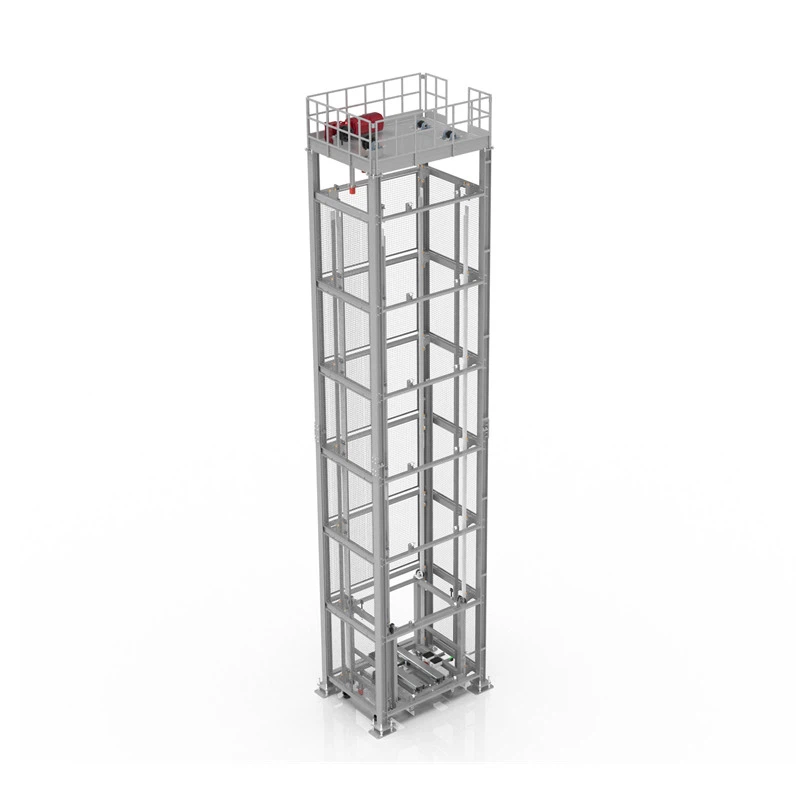
The YFY Nanjing project is a good example. Its warehouse operation involves production-line handling, storage, picking, shipping and empty-pallet return. On the equipment side alone, 14 latent AGVs, 7 pallet four-way shuttle robots and 4 level-changing lifters have to work around the same material flow.
Software has a different job at each stage.
The Warehouse Has to Follow Production and Orders
WMS sits between warehouse operations and the customer's business systems.
Through DELIECN API interfaces, it exchanges information with ERP and MES. Production requirements and orders can therefore enter the warehouse process directly, while inventory, locations, batches, FIFO, replenishment, picking and outbound activities remain under warehouse-level management.
This matters in a factory like YFY.
A production requirement may lead to material delivery. Finished products coming off the line need storage locations. An outbound order changes inventory again. Empty pallets then have their own return route.
When these movements share connected data, warehouse management is no longer separated from production and order fulfillment.
At YFY, this connection extends from line-side material handling to storage, picking, shipping and empty-pallet return. It gives the plant a much clearer link between what production needs, what the warehouse holds and what orders need to leave the site.

Fast Equipment Still Has to Wait If the Next Step Is Not Ready
The job changes once a warehouse task reaches the equipment.
A pallet stored by a four-way shuttle may later need a lifter and an AGV before it reaches its destination. Each machine can complete its own movement correctly and the overall process can still be slow.
We see this most clearly at transfer points.
The shuttle finishes first, but the lifter is occupied. The AGV arrives while the receiving position is still being used. Several movements require the same interface within a short period.
WCS handles these relationships between tasks and equipment.
At YFY, the first-floor AGVs and the shuttle-and-lifter operation above are not treated as unrelated automation. Their tasks have to meet at the right place and at the right time.
This is why equipment speed alone says relatively little about the final throughput of an automated warehouse. The handover between machines matters just as much.

Seeing the Warehouse Differently Changes How It Is Managed
YFY also introduced a 3D digital-twin central control system.
Its purpose is not simply to reproduce the warehouse on a large screen.
The digital model brings equipment positions, material movements, task progress, inventory and abnormal conditions into the same view. An operator can therefore look at the warehouse as an operating whole rather than checking one machine after another.
That becomes useful when something starts to drift away from normal operation.
A task area may begin accumulating work. Equipment may show an abnormal condition. Material may remain in one area longer than expected. With operating data being retained, these signals can be noticed earlier and reviewed together with what is happening elsewhere in the warehouse.
The team then has a chance to respond before a local problem develops into congestion or unnecessary downtime.
Historical task and process data also remain available for inventory analysis, operational review and audit. YFY described this capability as:
"Powered by digital twins, enabling intelligent management across the entire warehouse."

Three Problems That Need Three Different Answers
Looking at the YFY project makes the division much easier to understand.
WMS deals with the connection between production, orders and warehouse operations.
WCS deals with what happens when several types of automated equipment have to complete the same material journey.
3D visualization central control system gives the operating team a view across the warehouse, so emerging problems can be found and handled earlier.
They are three different jobs.
And in a working automated warehouse, all three eventually meet around the same thing: getting the right material through the warehouse at the right time, without losing control of inventory, equipment or the process along the way.