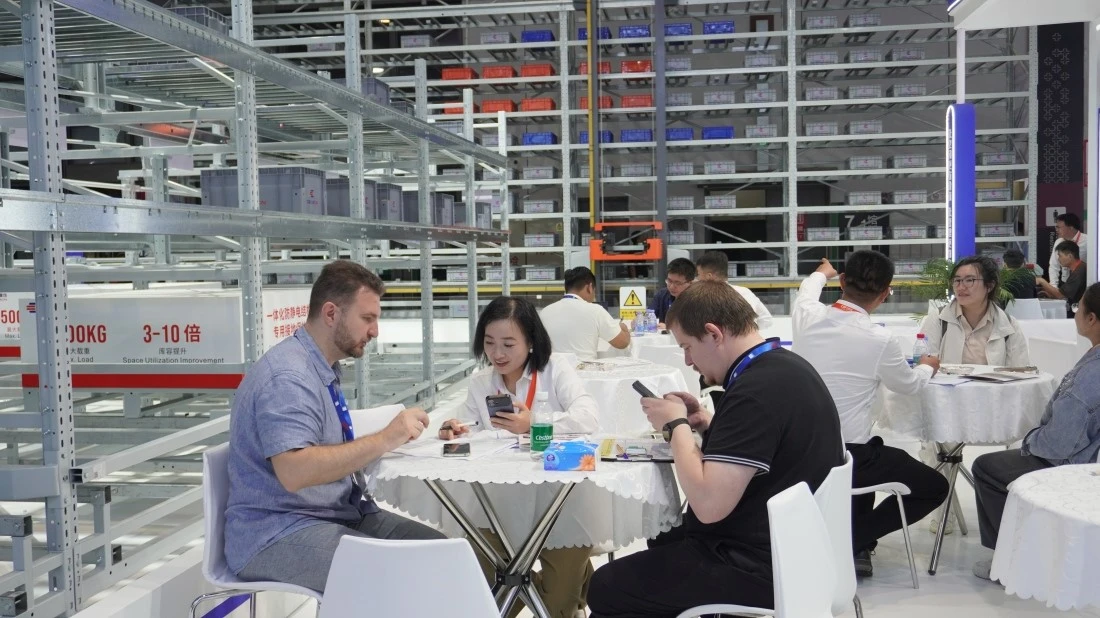
On October 12, the 26th China International Industry Fair (CIIF) opened at the National Exhibition and Convention Center in Shanghai. As an important platform showcasing China's industrial sector to the world, this year's fair focused on the full value chain of smart and green manufacturing, featuring advanced equipment, emerging technologies, and industry solutions.
As a provider of integrated smart warehousing and intralogistics solutions, DELIECN showcased the global debut of its Dual-Station Tote Four-Way Shuttle Robot,customized Pallet Four-Way Shuttle Robots for cold-storage, ambient-temperature, and high-dust applications, the Mini-FlyBox, and the Variable-Fork Tote Four-Way Shuttle Robot at Booth A008 in Hall 7.1H.
The exhibits addressed three key intralogistics challenges in manufacturing:
- How can automation meet safety, reliability, and efficiency requirements in demanding operating environments?
- As SKU counts rise and order cycles accelerate, how can systems keep pace with throughput and fulfillment demands?
- With limited space and varied load sizes, how can warehouses achieve denser storage and more flexible picking?
From product innovation and multi-equipment coordination to digital operations, DELIECN explored ways to make intralogistics more efficient, flexible, and reliable while supporting production coordination, order fulfillment, and business growth.
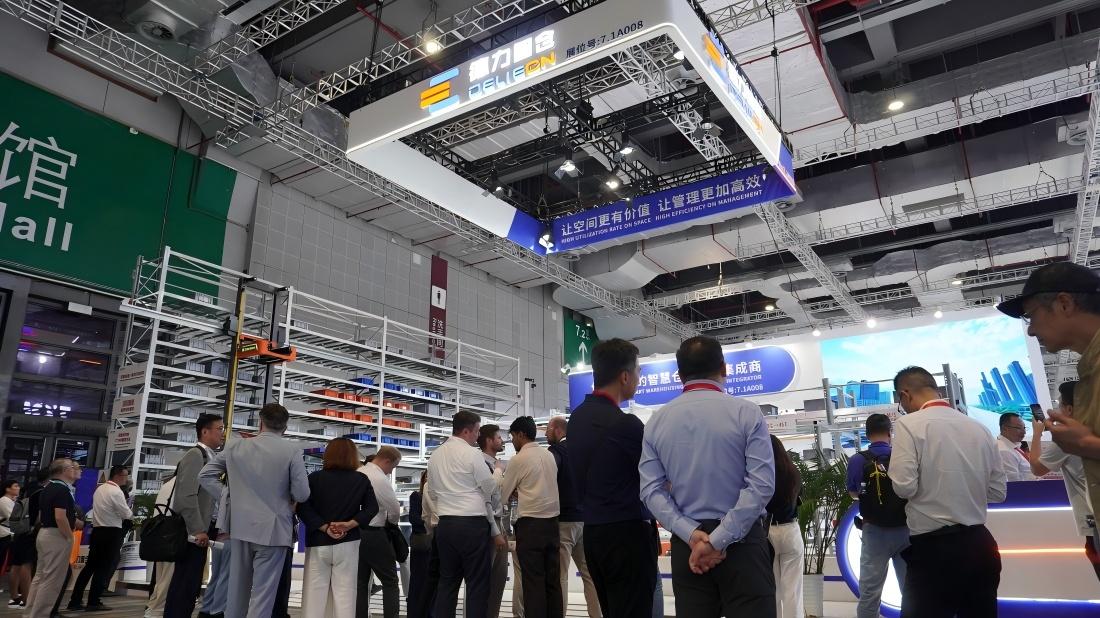
DELIECN booth at CIIF 2026
Through equipment demonstrations and digital system presentations, DELIECN showcased high-throughput tote handling, pallet shuttle robots configured for different operating conditions, high-density small-item storage, and the handling of totes in different sizes. The demonstrations showed how equipment capabilities, system coordination, and real operating needs come together.
Global Debut: Dual-Station Tote Four-Way Shuttle Robot
In high-SKU, high-throughput operations, improving efficiency is about more than increasing equipment speed. Reducing repeated trips and handling more items per task also matter.
Making its global debut, the Dual-Station Tote Four-Way Shuttle Robot can carry two totes in one operation, increasing operating efficiency by approximately 80%–90%.
The robot supports six inbound and outbound operation modes and two onboard tote-handling modes, for a total of eight operating modes. This allows it to handle different SKU profiles, storage depths, and task combinations. In multi-robot operations, the ECBS intelligent path-planning algorithm developed by DELIECN dynamically coordinates tasks and routes to help reduce congestion and waiting.
Designed for high-SKU, high-throughput applications in pharmaceuticals, automotive parts, 3C electronics, and cold chain, the robot offers a new option for handling peak orders, frequent storage and retrieval, and changing operational needs.
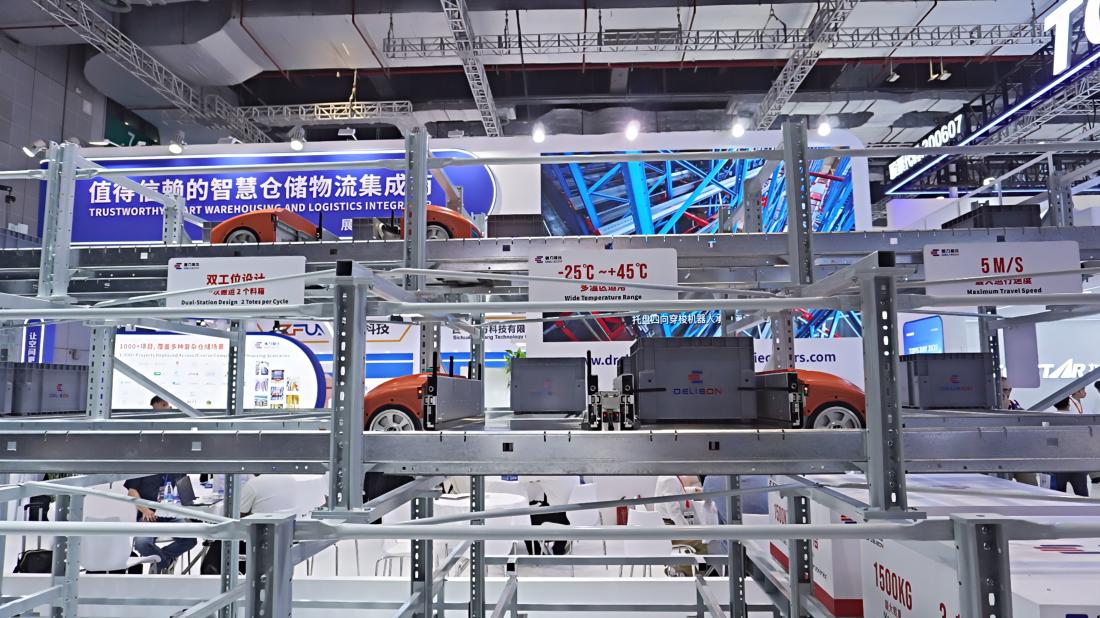
Two totes handled in one operation, reducing repeated trips
Pallet Four-Way Shuttle Robots for Different Operating Conditions
At CIIF, DELIECN presented Pallet Four-Way Shuttle Robots for a range of pallet-handling requirements-from ultra-high-bay, heavy-duty storage to ambient-temperature, cold-storage, and high-dust environments. These applications call for equipment configured around the pallet load, rack layout, and operating conditions.
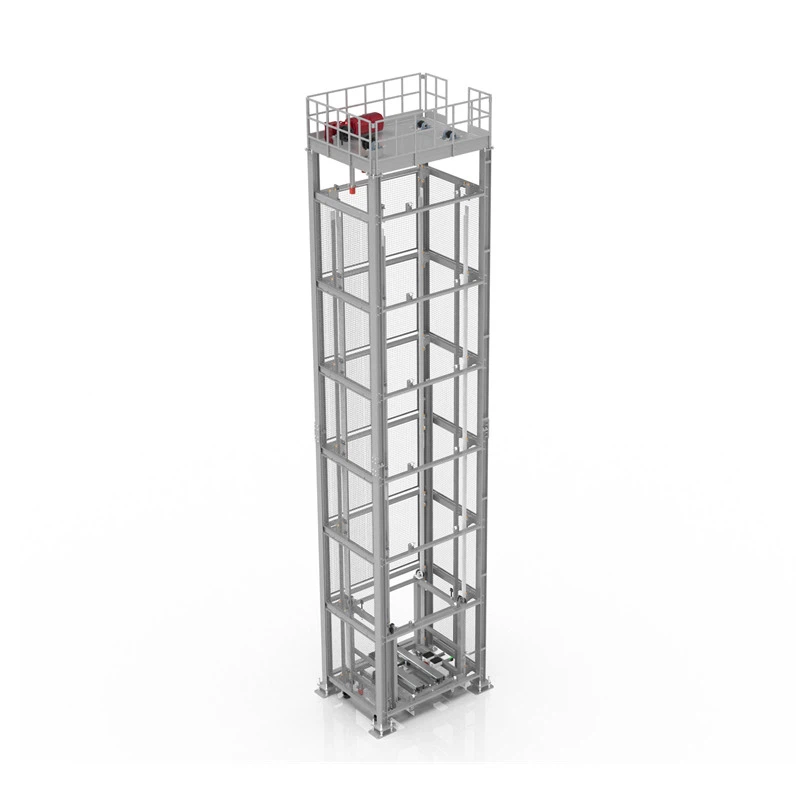
The robot supports pallet loads in the 1,500 kg class and features a 125 mm ultra-thin body with travel speeds of up to 120 m/min. Together with flexible level changes and coordinated operation with lifters and conveyors, these capabilities support dense storage and automated pallet movement across different rack levels.
For cold-storage applications down to −25°C, special structural design, cold-resistant materials, and sealing measures help the equipment operate reliably in low temperatures. For ambient-temperature and high-dust environments, configurations can be adapted to suit site conditions.
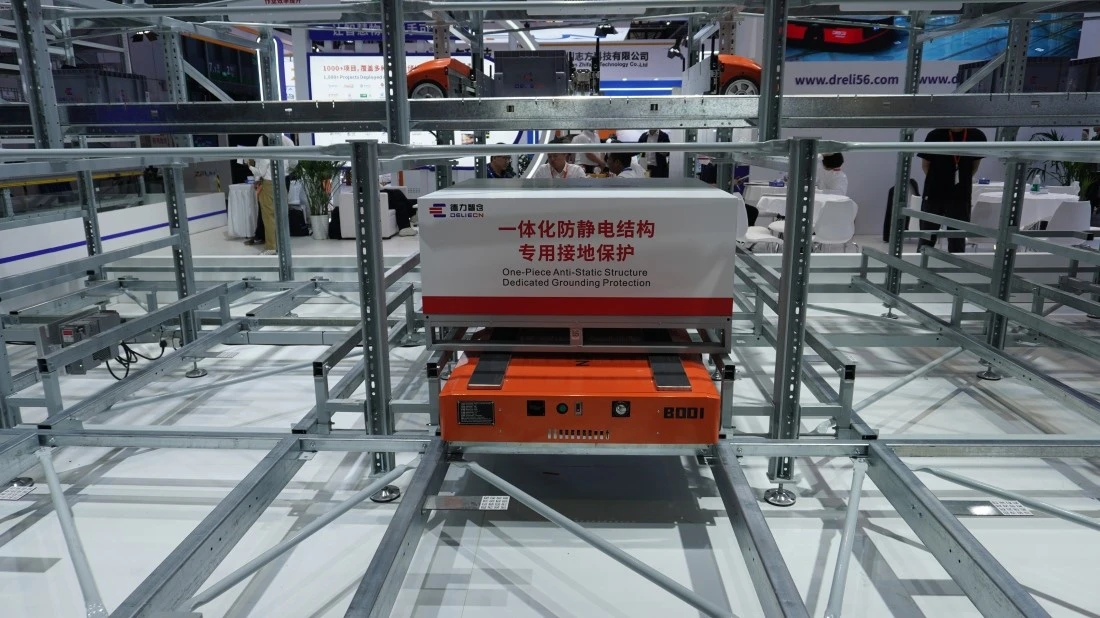
Pallet Four-Way Shuttle Robot
High-Density Storage: Mini-FlyBox
In multi-SKU small-item warehousing, space utilization affects both expansion costs and long-term operating efficiency.
Mini-FlyBox integrates its travel rails into the rack structure, combining horizontal movement and vertical level changes within the rack framework. Its single-station aisle can be as narrow as 860 mm. The system supports single- or dual-station operation and single- or double-extension configurations, making it suitable for high-density, multi-SKU small-item storage in warehouses up to 12 m high.
At the lowest rack level, the system can connect directly to conveyors or tote AMRs, linking high-density storage to inbound and outbound workstations and goods-to-person picking. It is suitable for small-item warehousing in automotive parts, 3C electronics, pharmaceuticals, e-commerce, and manufacturing.
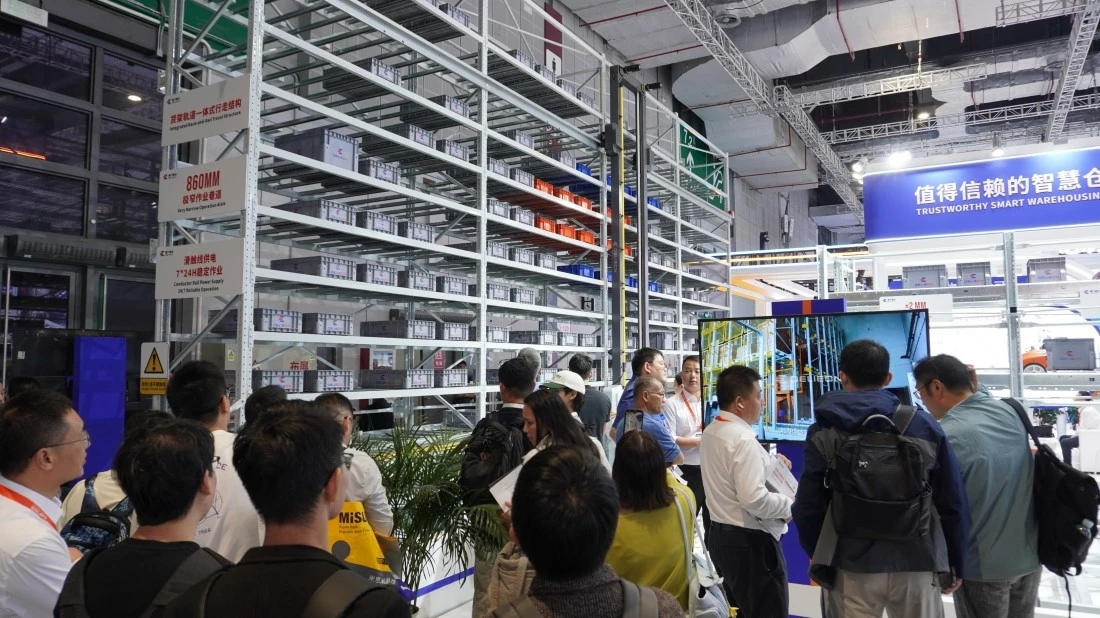
Mini-FlyBox High-Speed Tote Robot on display
Handling Different Tote Sizes: Variable-Fork Tote Four-Way Shuttle Robot
Warehouses in manufacturing, e-commerce, parts distribution, and retail often handle totes, bins, and cartons in different sizes. Fixed fork spacing can require additional equipment configurations or more complex zone planning, while limiting flexibility as operations change.
The Variable-Fork Tote Four-Way Shuttle Robot uses sensors to identify load dimensions and automatically adjust fork spacing. Its adjustable range of 140–600 mm allows it to handle a wider variety of totes, bins, and cartons.
For businesses with changing SKU profiles, packaging sizes, and order structures, this flexibility helps the automation system adapt as operational needs evolve.
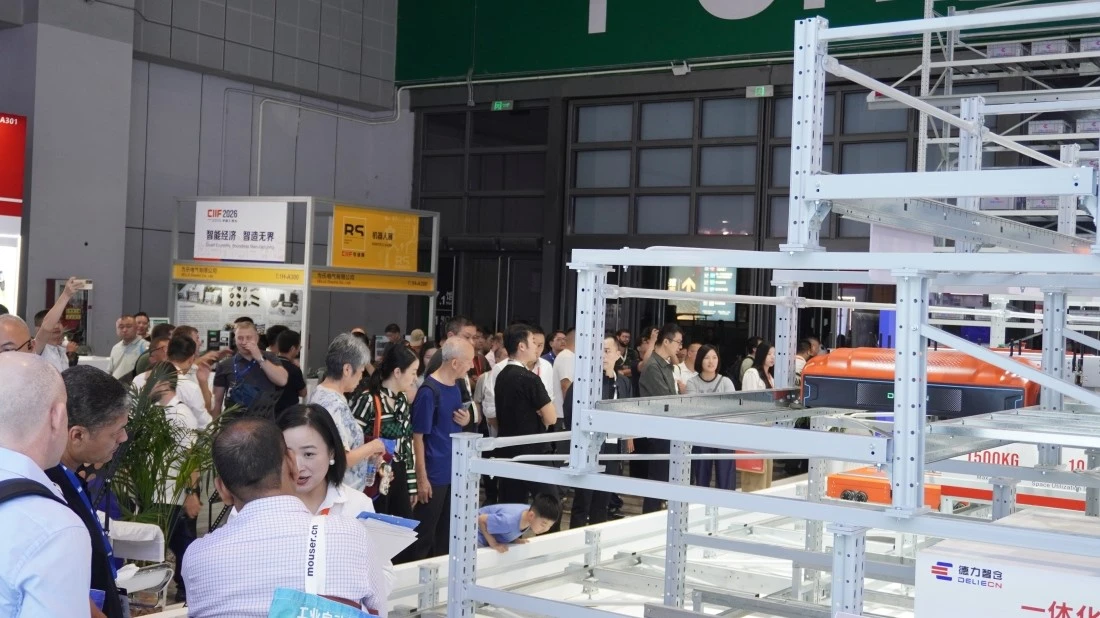
Adjustable fork spacing from 140 to 600 mm
From Intelligent Dispatch to Data-Driven Decisions
Equipment performance affects individual operations; system coordination shapes how quickly the warehouse can respond to orders.
DELIECN WCS centrally coordinates shuttle robots, lifters, conveyors, and workstations. Through multi-robot coordination, dynamic task allocation, and intelligent path planning, it helps reduce waiting and congestion and supports more consistent order fulfillment.
WMS connects inventory, orders, and operating tasks, and can link with business systems such as ERP and MES. This allows warehousing to become part of the broader process from production through delivery.
Meanwhile, the 3D Visualization Central Control System uses digital-twin technology to map equipment, inventory, tasks, alarms, and operating status in real time. This gives teams greater visibility into warehouse operations and supports data analysis and operational forecasting.
Operational data can help identify logistics bottlenecks, assess available capacity, optimize workflows, and inform future expansion, warehouse upgrades, and business planning. Automation can support both day-to-day order response and longer-term capacity planning.
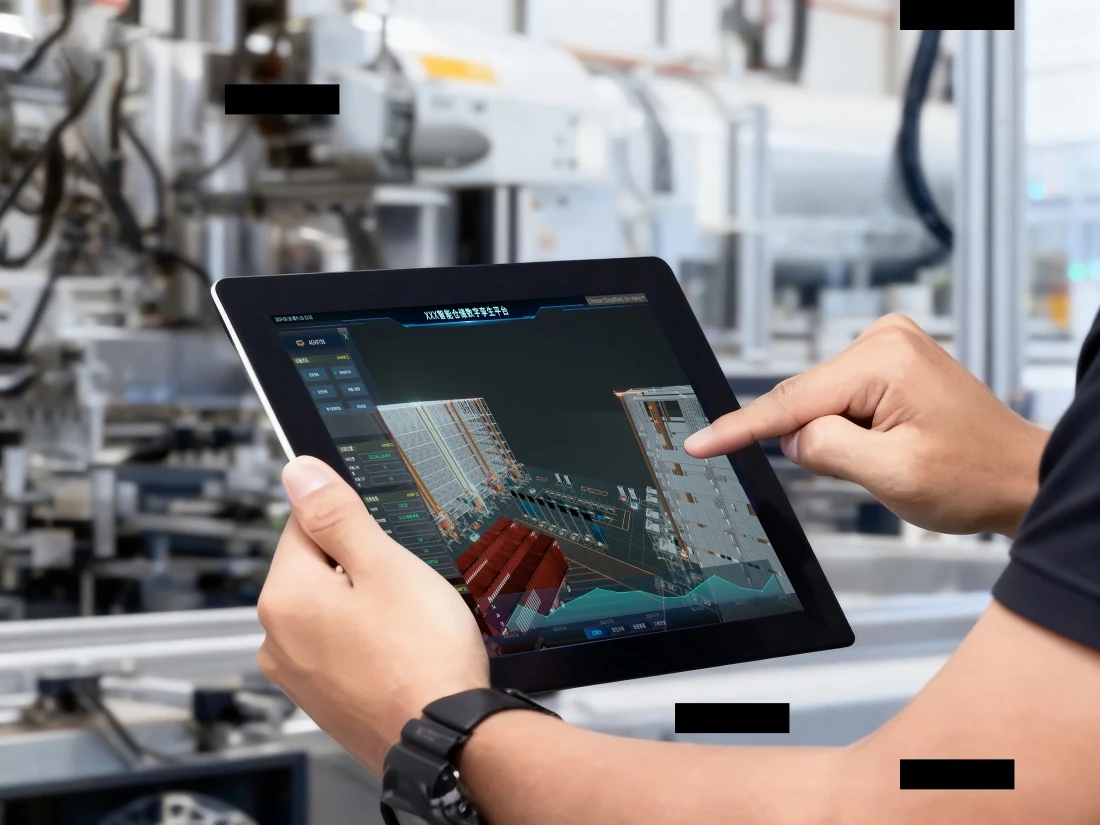
Demonstration of the 3D Visualization Central Control System
From Warehouse Automation to More Efficient Intralogistics
Across six stages-consulting and planning, solution design, manufacturing, installation and commissioning, acceptance and delivery, and after-sales service-DELIECN continues to develop its full-lifecycle capabilities for smart warehousing and intralogistics projects, supported by core equipment and software systems.
With experience from more than 1,000 projects, DELIECN smart warehousing and intralogistics systems serve industries including food, chemicals, pharmaceuticals, new energy, automotive parts, cold chain, paper, and precision manufacturing. Each industry has different materials, production rhythms, and operating environments. The goal is to help customers improve material flow, respond to orders more efficiently, gain clearer operational visibility, and build logistics systems that can support future growth.
Looking ahead, DELIECN will continue to focus on production, warehousing, and dispatch, strengthening coordination among equipment, software, and data to improve intralogistics performance and responsiveness and support manufacturers' ongoing growth.