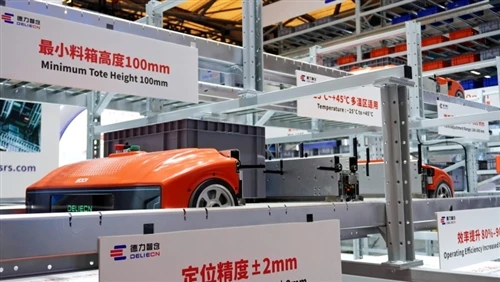
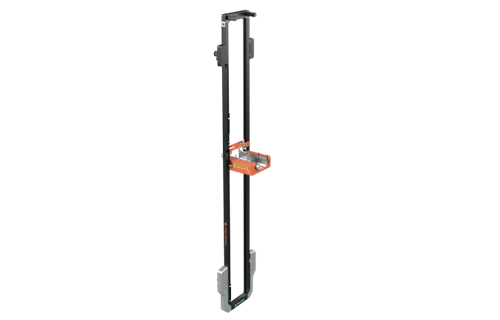
In the dynamic landscape of modern logistics and warehousing, material handling robots have emerged as game - changers. These robots are designed to automate the movement, storage, and retrieval of goods, enhancing efficiency, accuracy, and safety in various industrial settings. One question that often arises is whether material handling robots can be remotely controlled. As a leading supplier of material handling robots, I'm here to delve into this topic and provide you with a comprehensive understanding.
The Feasibility of Remote Control for Material Handling Robots
Remote control of material handling robots is not only feasible but also offers numerous advantages. With the advancement of technology, robots are now equipped with sophisticated communication systems that allow them to receive and execute commands from a distance. This is made possible through wireless technologies such as Wi - Fi, Bluetooth, and cellular networks.
1. Wireless Connectivity
Wireless connectivity is the backbone of remote control for material handling robots. Wi - Fi, for instance, provides a high - speed and reliable connection within a limited range, typically within a warehouse or a factory building. This enables operators to monitor and control robots from a central control room, making it easier to manage multiple robots simultaneously. Bluetooth, on the other hand, is suitable for short - range communication, which can be useful for tasks such as initial setup and configuration of the robots. Cellular networks, like 4G and 5G, offer wider coverage, allowing robots to be controlled remotely even outside the premises of a facility. This is particularly beneficial for outdoor material handling operations or for robots that need to be deployed in different locations.
2. Software and Control Systems
In addition to wireless connectivity, advanced software and control systems play a crucial role in enabling remote control. These systems are designed to translate operator commands into actions that the robots can understand. For example, a control software can send instructions to a robot to move to a specific location, pick up a pallet, and transport it to another destination. The software also provides real - time monitoring of the robot's status, including its position, speed, and battery level. This allows operators to make informed decisions and adjust the robot's operations as needed.
Benefits of Remotely Controlling Material Handling Robots
1. Enhanced Safety
One of the primary benefits of remote control is improved safety. In hazardous environments, such as areas with high temperatures, toxic chemicals, or heavy machinery, operators can control the robots from a safe distance. This reduces the risk of accidents and injuries, protecting the well - being of workers. For example, in a chemical warehouse, a remotely controlled robot can handle the transportation of hazardous materials without exposing human operators to potential dangers.


2. Increased Efficiency
Remote control also allows for more efficient operation of material handling robots. Operators can quickly respond to changing conditions and adjust the robots' tasks in real - time. For instance, if there is a sudden change in the production schedule, the operator can redirect the robots to handle different tasks, ensuring that the workflow is not disrupted. Moreover, remote control enables centralized management of multiple robots, optimizing the overall operation of the warehouse or factory.
3. Flexibility
Another advantage of remote control is flexibility. Robots can be easily re - programmed and re - deployed to different tasks or locations as needed. This is particularly useful in industries where production requirements change frequently. For example, in an e - commerce fulfillment center, during peak seasons, the robots can be remotely controlled to handle a higher volume of orders, and during off - peak seasons, they can be used for other tasks such as inventory management.
Our Range of Remotely Controllable Material Handling Robots
As a material handling robot supplier, we offer a wide range of robots that can be remotely controlled.
1. Pallet Four - Way Shuttle Robot
Our Pallet Four - Way Shuttle Robot is a highly versatile and efficient solution for pallet storage and retrieval. It can move in four directions (forward, backward, left, and right), allowing it to access pallets in a dense storage system. This robot can be remotely controlled to perform tasks such as pallet loading, unloading, and storage, providing a high level of flexibility and efficiency in warehouse operations.
2. Pallet Two - Way Shuttle Robot
The Pallet Two - Way Shuttle Robot is designed for simpler pallet handling tasks. It can move in two directions (forward and backward) and is ideal for warehouses with a more linear layout. This robot can be easily integrated into existing warehouse systems and can be remotely controlled to optimize the flow of pallets.
3. Customized Pallet Stacker Crane
Our Customized Pallet Stacker Crane is a powerful and reliable solution for high - density pallet storage. It can be customized to meet the specific requirements of different warehouses, including the height, length, and width of the storage racks. This crane can be remotely controlled to stack and retrieve pallets with high precision, improving the overall efficiency of the warehouse.
Challenges and Considerations
While remote control of material handling robots offers many benefits, there are also some challenges and considerations that need to be addressed.
1. Communication Reliability
The reliability of the communication between the operator and the robot is crucial. Any interruption in the communication can lead to errors or even accidents. To ensure reliable communication, redundant communication systems can be used, and regular maintenance and testing of the communication equipment are necessary.
2. Security
Security is another important concern. As the robots are connected to the network, they are vulnerable to cyber - attacks. To protect the robots and the data they handle, robust security measures, such as encryption, firewalls, and access control, need to be implemented.
3. Operator Training
Operators need to be properly trained to use the remote control systems effectively. They should have a good understanding of the robot's capabilities, the control software, and the safety procedures. Training programs should be provided to ensure that operators can operate the robots safely and efficiently.
Conclusion
In conclusion, material handling robots can indeed be remotely controlled, thanks to the advancements in wireless connectivity, software, and control systems. Remote control offers numerous benefits, including enhanced safety, increased efficiency, and flexibility. As a material handling robot supplier, we are committed to providing our customers with high - quality, remotely controllable robots that can meet their specific needs.
If you are interested in learning more about our material handling robots or would like to discuss a potential purchase, please feel free to contact us. We look forward to working with you to optimize your material handling operations.
References
- "Automated Material Handling Systems: Design and Operation" by Peter R. G. Clarke
- "Warehouse Automation: Technologies and Applications" by John A. White
- Industry reports on material handling robots from leading research firms