In the realm of material handling and warehousing, pallet stacker cranes play a pivotal role in optimizing space and streamlining operations. As a seasoned pallet stacker crane supplier, I've witnessed firsthand how various factors can significantly influence the functionality and efficiency of these machines. One such crucial aspect is the load center.
Understanding the Load Center
The load center is defined as the distance from the vertical face of the fork to the center of gravity of the load. For standard pallets, the industry often uses a load center of 24 inches (600 mm). But this value can change depending on the shape, size, and weight distribution of the load.
When a load is placed on the forks of a pallet stacker crane, its center of gravity must be considered. If the actual load center exceeds the rated load center of the crane, it can lead to a series of operational challenges. For instance, take a large, irregularly shaped load. Its center of gravity might be offset, moving farther from the vertical face of the fork than normal. This extended load center can have a rippling effect on the stability and performance of the pallet stacker crane.
Impact on Stability
Stability is the cornerstone of safe and efficient operation for any pallet stacker crane. The load center directly affects this stability. A well - balanced load, with its center of gravity within the rated load center, allows the crane to distribute the weight evenly. This even distribution keeps the machine firmly grounded, reducing the risk of tipping over.
However, when the load center is off - balance or exceeds the rated capacity, the crane's stability is compromised. The counterbalance mechanism, which is designed to keep the crane stable under normal load conditions, may not be able to compensate for the additional stress. The result is an increased risk of the crane tipping forward or backward during lifting, moving, or stacking operations. This not only endangers the operator and the load but also causes significant damage to the crane and the surrounding infrastructure.
Influence on Lifting Capacity
The load center and the lifting capacity of a pallet stacker crane are inversely related. As the load center increases, the lifting capacity of the crane decreases. This relationship is based on the principles of physics, specifically the moment of force.
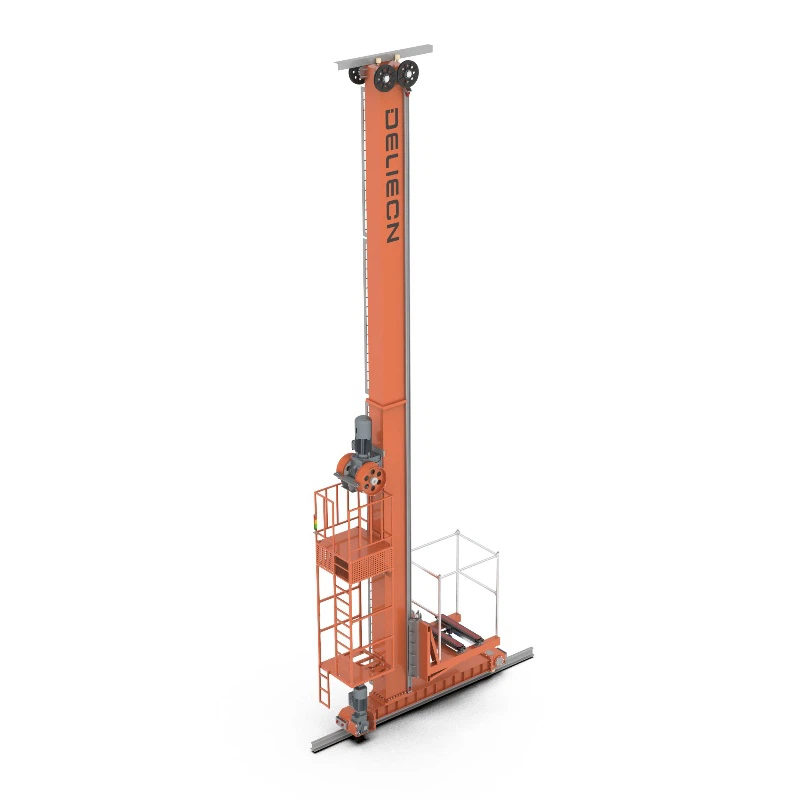

Let's say we have a Heavy-Duty Pallet Stacker Crane with a rated lifting capacity of 5,000 pounds at a 24 - inch load center. If we increase the load center to 30 inches, the lifting capacity will drop. This is because the additional distance from the fork face creates a greater turning force, or moment, around the crane's pivot point. To maintain stability and prevent tipping, the crane can safely lift less weight.
This reduction in lifting capacity can have profound implications for warehousing operations. If not properly accounted for, it can lead to overloading the crane, which causes premature wear and tear on the hydraulic system, the mast, and other critical components. Over time, this overloading can result in costly breakdowns and downtime.
Effect on Mast Performance and Precision
The mast of a pallet stacker crane is responsible for lifting and lowering the load. The load center affects the mast's performance in multiple ways.
When the load center is too large, the mast experiences uneven stress distribution. The extra stress on one side of the mast can cause it to bend or deflect more than normal. This deflection not only affects the vertical movement of the fork but also reduces the precision of stacking operations. In a high - density warehouse environment, where accurate placement of pallets is essential, even a small deviation can lead to inefficiencies and potential safety hazards.
For example, in a narrow - aisle warehouse using a Single-Mast Pallet Stacker Crane, precise mast operation is crucial. If the load center is off, the crane may struggle to align the pallet correctly with the storage rack, leading to misaligned pallets, wasted space, and longer handling times.
Relationship with Fork Design
Forks are the primary interface between the crane and the load. The load center has a direct bearing on fork design and selection.
The length and thickness of the forks are designed to handle loads within a specific load - center range. If the actual load center is outside this range, the forks may not be able to support the load properly. For very long load centers, standard forks may bend or break under the excessive stress.
It's essential for customers to provide accurate information about the loads they plan to handle when Customized Pallet Stacker Crane is being considered. This allows us, as suppliers, to design and install the appropriate forks that can safely handle the loads with the given load centers.
Mitigating the Issues Related to Load Center
As a pallet stacker crane supplier, we understand the importance of mitigating the issues caused by improper load centers. Here are some strategies we recommend:
- Load Assessment: Before operating the crane, conduct a thorough assessment of the load. Identify its center of gravity, weight, and dimensions. This will help determine if the load is within the crane's rated load - center capacity.
- Operator Training: Provide comprehensive training to the operators on understanding load centers and their impact. Train them to properly position the load on the forks to ensure the center of gravity is within the acceptable range.
- Customization: For customers with unique load - handling requirements, we offer customized solutions. This may include modifying the crane's design, such as adjusting the counterbalance system, upgrading the forks, or enhancing the mast structure to accommodate larger load centers.
Cost Considerations
Understanding the impact of the load center on the operation of a pallet stacker crane also has significant cost implications. Ignoring the load - center issue can lead to increased maintenance costs due to premature wear and tear on the crane components. There are also potential costs associated with safety incidents, such as injuries to operators or damage to goods and infrastructure.
On the other hand, investing in a well - designed crane that can handle the specific load - center requirements upfront can save money in the long run. Our Customized Pallet Stacker Crane solutions are tailored to meet the exact needs of our customers, ensuring optimal performance, safety, and cost - effectiveness.
Conclusion
In conclusion, the load center is a critical factor that significantly affects the operation of a pallet stacker crane. It impacts stability, lifting capacity, mast performance, fork design, and overall cost. As a leading pallet stacker crane supplier, we are committed to helping our customers understand these implications and providing them with the best - suited solutions.
If you are in the market for a pallet stacker crane or need advice on how to handle specific load - center challenges, we encourage you to reach out to us. Our team of experts is ready to assist you in selecting the right crane and ensuring that your warehousing operations run smoothly and safely.
References
- American Society of Mechanical Engineers (ASME). (Year). B56.1 - Safety Standard for Low - Lift and High - Lift Trucks.
- International Organization for Standardization (ISO). (Year). ISO 3691 - Fork - Lift Trucks -- Safety Requirements and Verification.
- Material Handling Industry of America (MHIA). (Year). Best Practices for Pallet Stacker Crane Operations.