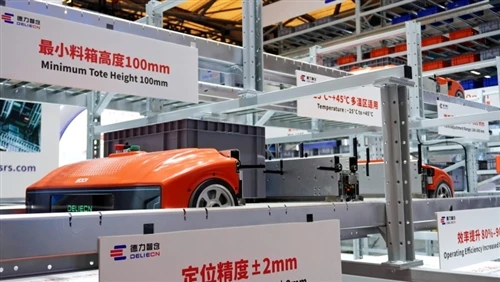
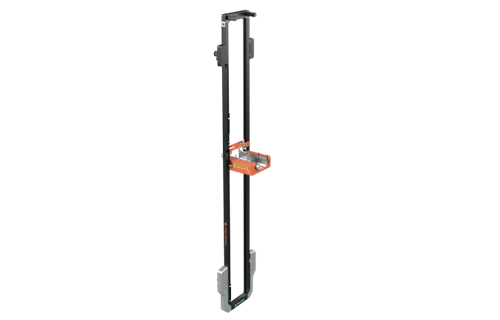
A good pallet shuttle system supplier should be able to build a reliable robot. But for most automation projects, that is only the starting point.
The harder part begins when the equipment enters a real warehouse.
An automotive spare-parts center may need to handle tens of thousands of SKUs and different load carriers. A pharmaceutical warehouse has to manage batches, expiry dates and traceability. A chemical plant may run continuously for 24 hours while handling heavy pallets, powder materials and strict safety requirements.
The shuttle technology may look similar, but the project logic is completely different.
That is why, when companies compare pallet shuttle system suppliers in 2026, product specifications should not be separated from industry knowledge and project execution experience. A supplier that understands the application can often identify problems before they reach the installation stage.
Automotive Warehouses Test Flexibility, Not Just Storage Density
Automotive spare-parts warehouses are a good example.
The challenge is rarely one standard pallet moving repeatedly between the same locations. Inventory may include small parts, large components, body parts, oils, bumpers and non-standard items, all with different turnover rates and storage requirements.
Toyota's spare-parts center manages nearly 45,000 SKUs across multiple warehouse zones.
For the large-parts area, steel storage cages were not all the same height. One specification reached 1,675 mm, while another was approximately 1,200 mm.
Using the tallest cage height for every storage level would have wasted a large amount of vertical space.
The pallet shuttle area was therefore designed with different rack clearances according to the actual cages. It eventually provided approximately 3,091 pallet and cage positions, supported by 14 pallet four-way shuttle robots and four pallet lifters.
The important part of this case is not the number of robots.
It shows why automotive project experience matters.
A supplier needs to understand inventory structure, carrier differences, access frequency and the relationship between different warehouse zones before deciding how much shuttle automation should be used.
In Toyota's wider warehouse project, WMS/WCS also had to connect with TOPSS and an upstream warehouse platform. The complete solution helped reduce the internal supply cycle from eight days to two days.
A supplier that only knows how to manufacture the shuttle would see a storage problem. An experienced automotive logistics team sees a material-flow and information-flow problem at the same time.
Pharmaceutical Warehouses Bring a Different Set of Questions
Pharmaceutical customers usually start from a different concern.
They need to know exactly:
Which batch is stored?
Where is it?
When should it leave?
Can the movement be traced later?
This changes the way an automated warehouse is designed.
At Zhenglai, the warehouse needed to handle palletized goods. The completed system provided more than 893 storage locations, reached approximately 1000 cartons per hour, and achieved 99.99% data accuracy for product lifecycle traceability. Storage-space utilization reached about 95%, while operating efficiency increased by approximately 60% compared with the previous model.
The supplier needs to understand batch control, inventory rotation, traceability, zoning, throughput and the interfaces between storage and production or distribution.
If a supplier discusses only speed and storage density in a pharmaceutical project, the conversation is probably not deep enough.
Chemical Projects Put More Pressure on System Architecture
Chemical warehouses often expose another side of supplier capability.
A magnesium sulfate project had to manage different products and packaging formats at the same time: 50 kg woven bags and 1-ton bulk bags, continuous production, high-density storage and two different outbound flows.
The storage system used 13 levels, 6,309 pallet positions, 13 pallet four-way shuttle robots and four fork-type pallet lifters.
One of the more interesting decisions was the lifter configuration.
A conventional multi-level shuttle warehouse can require conveyor transfer stations on many rack levels. In this project, fork-type pallet lifters were used to pick and place full pallets directly, reducing the amount of conveyor equipment installed inside the high-bay rack.
That decision affected more than the initial purchase price.
Fewer conveyors meant fewer motors, chains, sensors and electrical parts inside areas that are relatively difficult to access for maintenance.
The four lifters still had to meet the throughput requirement. Each provided about 40 pallets per hour, allowing the system to cover approximately 123 pallets per hour of peak inbound and outbound demand.
The project also used mechanical lifting on the shuttle instead of hydraulic lifting, helping avoid hydraulic-oil contamination risk in a powder chemical environment.
This is the kind of detail that industry experience brings to a project.
A supplier unfamiliar with chemical operations might focus on how many pallets fit in the rack. An experienced team will also ask about contamination, maintenance access, continuous production, safety, redundancy and what happens if one piece of equipment becomes unavailable.
The Best Supplier Should Be Able to Explain Why the Design Is Different
This is perhaps the simplest way to compare pallet shuttle suppliers.
Show them three different projects-automotive, pharmaceutical and chemical-and see whether they propose the same warehouse with different dimensions.
They should not.
Toyota needed different storage heights and flexible multi-robot operation.
Zhenglai needed high inventory accuracy and lifecycle traceability.
The magnesium sulfate project needed continuous operation, heavy-load handling and a design that reduced equipment inside the rack.
The robot may come from the same product family. The engineering decisions should be different.
This is also why references are more useful when suppliers explain what was difficult rather than simply showing a project photo.
Ask:
What constraint changed the original design?
Why was this storage technology selected instead of another one?
Where was the expected bottleneck?
How was maintenance considered?
What would you design differently for our warehouse?
The quality of those answers reveals far more than a specification sheet.
Product Quality Still Matters
None of this makes hardware quality less important.
Load capacity, positioning accuracy, mechanical reliability and safety are fundamental.
But a strong pallet shuttle supplier also needs the software and implementation capability to turn those specifications into a working warehouse.
In multi-robot systems, WCS has to coordinate shuttles, pallet lifters and transfer equipment. WMS may need to connect with ERP or MES. During commissioning, mechanical, electrical and software teams need to solve problems together rather than passing responsibility between different vendors.
DELIECN develops and manufactures approximately 90% of its core hardware and software in-house, which supports this kind of integrated commissioning across shuttle robots, WMS/WCS and related equipment.
For customers, the practical value is clear responsibility when something needs to be adjusted on site.
What Should You Really Compare in 2026?
When evaluating a pallet shuttle system supplier, the quotation should not be the first document you compare.
Start with the supplier's understanding of your industry.
Then look at completed projects with similar loads, operating conditions and business processes.
Check who develops the core equipment and software, how multi-device coordination is handled, how maintenance and redundancy are planned, and whether the supplier can explain the compromises behind its proposed design.
Only then compare price.
A pallet shuttle system may run for many years. The supplier you choose will influence much more than the robot itself-it will influence whether the warehouse fits the way your industry actually operates.